Middle East / Yemen
Auto export to Yemen
Yemen is a real destination market for US auction stock and one of the more constrained lanes we run. Most of the cars that actually end up in Yemen got there because a UAE trader bought them in a Jebel Ali free zone and re-shipped to Aden. That's a market sales pattern, not a Dapex Yemen service. What Dapex itself can ship to Yemen on a single Dapex BL is either a direct call at Aden where carriers offer one, or a Through Bill of Lading transshipped at Salalah in Oman, which is the proper carrier route into Yemen. Both end at Aden port discharge, both run under OFAC screening on the Yemeni end-buyer, and both reflect the current Red Sea security picture in the freight.
For reference purposes only. Regulations, policies, and procedures change constantly. Ensure you verify and validate all requirements for your specific shipments before initiating any.
The Yemen lane, in four numbers.
Government-controlled, the country's primary commercial port. Mukalla as a secondary. Houthi-controlled Red Sea ports not served.
Six container warehouses, five RoRo terminals. Container is the working mode for both Yemen routings.
Door to Aden on a Dapex BL, either route. Wider end if Red Sea diversions push carriers around the Cape.
SDN screening on the Yemeni end-buyer, since Dapex's BL terminates at Aden. Houthi-controlled destinations refused.
Two real Dapex routings into Yemen.
Dapex's Yemen lane is what we can carry from a US loading point to Aden on a single Dapex BL, with our name on the file end to end. There are two ways to do that. One is a direct carrier call at Aden, the other is a Through Bill of Lading transshipped at Salalah in Oman. Both land at the same place and both put OFAC screening on the actual Yemeni consignee.
One ship, one BL, security in the price.
Where a carrier offers a direct call at Aden, the car loads in the US, sails via Suez and the Red Sea, and discharges at Aden under a single Dapex BL consigned to the Yemeni buyer or their clearing agent. The route is exposed to the Red Sea security picture and to Suez routing variability, which both carriers and insurers price into the freight. Carriers willing to call directly are limited, and pricing tracks the threat level.
- Single Dapex BL to Aden
- Suez and Red Sea, with Cape diversion when needed
- Carrier availability is the binding constraint
- Red Sea risk premium in the rate
The proper carrier transshipment.
The carrier moves the container to Salalah in Oman, one of the regional transshipment hubs on the Arabian Sea, and the same carrier connects it to Aden on a feeder or bonded onward leg, all under one Through BL. The Salalah-to-Aden approach runs along the Gulf of Aden and doesn't cross the Bab el-Mandeb strait, which is the worst chokepoint, though some Gulf of Aden exposure remains. Schedules are more predictable than a direct call, since the carrier owns both legs.
- Single Through BL, carrier-owned connection
- Avoids the Bab el-Mandeb strait inbound
- Predictable scheduled feeder out of Salalah
- Cargo stays in bond, no UAE entry
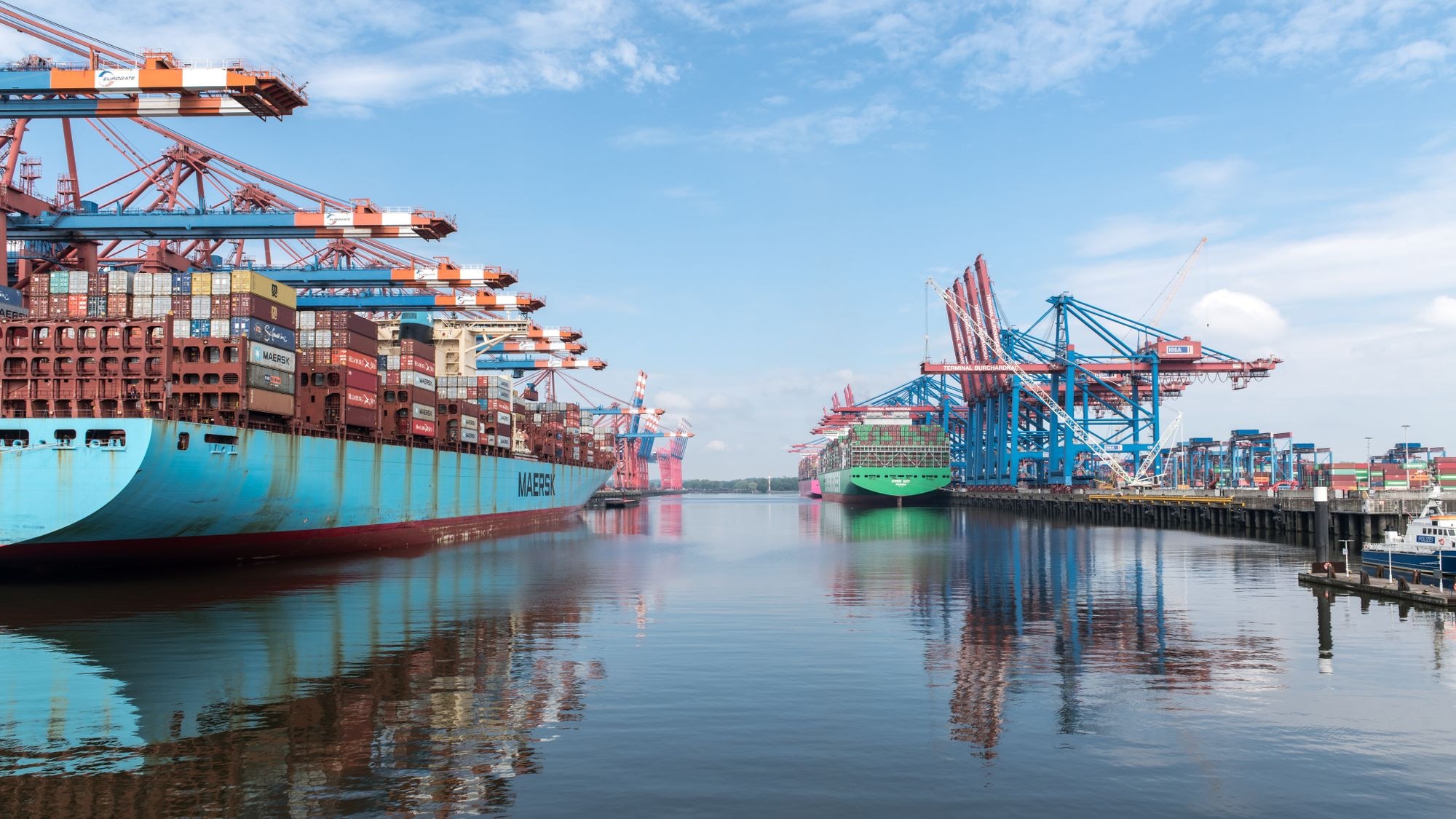
Same US loading. Two ways across the Indian Ocean.
The US-side operation is the same as our other lanes. What changes is whether the carrier discharges at Aden directly or relays the car at Salalah on its own service. We containerize for both, since both pick the car up at one of our six container warehouses.
Direct call at Aden
Load at one of six container warehouses: NY/NJ, Savannah, Miami, Houston, Long Beach, Seattle. The container sails via the Suez Canal and down the Red Sea to Aden, or diverts around the Cape of Good Hope when carriers and insurers route away from the Bab el-Mandeb. The HBL is consigned to the Yemeni buyer or their clearing agent in Aden.
The binding constraint: not every carrier is willing to call directly at Aden, and the ones that are reprice as the security picture shifts. We confirm carrier availability and current routing before quoting.
Transit: roughly 35 to 45 days door to Aden on a Suez routing, longer if the carrier is on a Cape diversion.
Salalah Through BL
Load the same way, but with a carrier whose service uses Salalah in Oman as its regional transshipment hub and connects to Aden on its own feeder or bonded onward leg. The whole movement runs under a single Through BL with the carrier responsible for the connection. The cargo never enters Omani commerce, it stays under bond at Salalah.
Why it helps: the Salalah-to-Aden leg runs along the Gulf of Aden rather than crossing the Bab el-Mandeb, and the scheduled feeder is steadier than a direct call subject to security reroutes. Carriers that don't want to call Aden directly will still relay through Salalah.
Transit: roughly 35 to 45 days door to Aden, more predictable than a direct call.
OFAC at the front, Aden customs at the back.
Yemen is a sanctions-sensitive lane and the compliance work happens at the bookend points: US-side pre-screen on the Yemeni consignee before we quote, and Yemen-side clearance at Aden. Because Dapex's BL terminates at Aden on both routings, the SDN screen lands on the actual end-buyer, not a free-zone intermediary.
The clearance path
Pre-quote OFAC screen
Before we quote, we run the Yemeni consignee against the OFAC SDN list and refuse anything destined for a Houthi-controlled port or a sanctioned recipient. This is where Dapex's compliance reach actually sits on this lane, and we don't book around it.
US-side preparation
AES filing, ISF where required, HBL issuance under Dapex's NVOCC license, commercial invoice, packing list. Clean title, or a salvage certificate where the car is sold and shipped as salvage. HBL consigned to the Yemeni buyer or their clearing agent in Aden.
Ocean transit
Either a direct call at Aden via Suez and the Red Sea, or a Through BL transshipped at Salalah and connected to Aden by the carrier's feeder. Routing follows current carrier and insurer guidance on the Red Sea. The BL releases against payment.
Aden clearance and registration
Yemen Customs Authority processes the import declaration at Aden. Standard customs duty applies. LHD only for registration. No formal age cap, though demand favors recent model years given the cost structure. The buyer's clearing agent handles the destination side. Dapex stops at Aden port discharge on both routings.
Required documents
Original title or salvage certificate
Clean title for a car that will register. Salvage certificate where the unit is sold and shipped as salvage for repair.
Commercial invoice on Dapex letterhead
Consignee, vehicle details, declared value, HBL number.
Packing list
Standard format. Needed when personal effects are co-loaded in a container.
HBL
Consigned to the Yemeni buyer or their clearing agent in Aden. Released after payment of the quoted amount.
What Dapex files, US side
OFAC pre-screen on the Yemeni consignee before quoting, run again at booking. AES filing with US Customs. ISF where required. HBL under Dapex's NVOCC license, consigned to the Yemeni buyer or their clearing agent in Aden. Commercial invoice and packing list on Dapex letterhead. Title verification through our title team before pickup. Routing choice between direct Aden and Salalah Through BL, based on carrier availability and the current Red Sea picture. Pre-alert pack to the Aden clearing agent. The Arabic-speaking desk owns the file end to end.
If your plan is the UAE re-export pattern, Dapex's actual booking is a UAE shipment with the UAE trader as the consignee, and the right reference is the UAE page. We won't carry that under a Yemen file because we wouldn't be screening the actual recipient.
Durable platforms, sanctioned cargo refused.
Yemen runs hard on its cars, so what works here is the same set of durable Japanese and Korean platforms that work everywhere else with rough roads. What doesn't move is anything we can't screen or anything bound for territory we won't serve.
Toyota and durable SUVs.
Toyota Land Cruiser, Prado, Hilux, Sequoia. The Hilux dominates the commercial and rough-terrain side. Hyundai Tucson, Santa Fe. Honda CR-V and Pilot. Mid-size and full-size SUVs with a service history people can find parts for. LHD only. Newer model years generally, since the freight on this lane doesn't reward cheap cars.
Aden only, security priced in.
We carry to Aden, government-controlled, and to Mukalla as a secondary where the carrier supports it. We don't carry to Hodeidah, Saleef, or Mokha, which are Houthi-controlled and off-limits to a US-licensed forwarder. The Red Sea risk shows up in the freight whichever routing the carrier uses.
Sanctioned cargo and the rules.
Anything destined for a consignee on the OFAC SDN list, anything for entities with material ties to sanctioned organizations, and anything for Houthi-controlled ports. We also won't carry under a Yemen file when the actual operation is a UAE free-zone resale, since we wouldn't be screening the end-buyer. Standard Dapex rules: clean title or salvage certificate, no unreleased liens, no personal effects loose in RoRo. Quarter-tank fuel maximum on RoRo per SOLAS.
What moves the rate on this lane.
Two things drive the number more than anything else: which routing the carrier supports today, and the current Red Sea security situation. Both can change week to week, and we quote against current conditions, not last quarter's.
Our work, our cost.
- Warehouse operations
- Booking fee
- Documentation handling
- Title verification
- OFAC pre-screen
- HBL issuance
- Routing selection
Carrier and routing-driven.
- Ocean freight (carrier-set)
- Fuel and bunker surcharges
- Red Sea risk premium
- Salalah transshipment and feeder charges
- Aden port handling
- Cape diversion surcharge where applied
- Inland trucking to loading point
Service standards.
- Compliance
- OFAC screening
- Documentation accuracy
- Dispatch priority
Lane-specific drivers
Carrier willingness, week by week
Which carriers will call Aden directly, and which insist on relaying through Salalah, shifts with the security picture. The desk confirms the current set before quoting rather than working off a standing routing.
Red Sea security and the Cape question
When the Red Sea is hot, carriers reroute around the Cape of Good Hope and push freight and transit up. The premium and the extra days are real, not theoretical, and they belong on the quote when they apply.
Direct versus Salalah
On a given week, one can be meaningfully cheaper or more reliable than the other. We don't default to one. The desk checks both before quoting, since the choice can move both freight and transit.
OFAC screening overhead
The pre-quote screen on the Yemeni consignee is non-negotiable and we don't compress it for speed. A car bound to a recipient we can't clear doesn't get a quote, full stop.
Title quality
The buyer or their clearing agent runs their own VIN check, so we verify title before pickup and flag any branded history in advance.
Who handles Yemen accounts.
The Arabic-speaking desk runs every Yemen account. On this lane the desk's most important job is the OFAC pre-screen and the routing call between a direct Aden service and a Salalah Through BL, both of which shift with current carrier and security conditions.
Arabic-speaking Desk
Yemen, UAE, Saudi Arabia, Jordan, Iraq, Lebanon, and the wider Arabic-speaking markets. Sunday to Thursday business hours in Arabia Standard Time, plus extended hours by request. Aden clearing-agent coordination on Dapex's Yemen files.
What the desk owns.
OFAC pre-screen on the Yemeni consignee before quoting. The routing call between a direct Aden carrier and a Salalah Through BL, based on current availability and the Red Sea picture. File management through BL. Title verification before pickup. Aden clearing-agent coordination. Escalation on customs or carrier holds. Saying no, clearly, on sanctioned cargo or Houthi-controlled destinations.
Things buyers ask about the Yemen lane.
Two ways on a single Dapex BL. Either a direct carrier call at Aden, via Suez and the Red Sea, where a carrier offers one. Or a Through BL transshipped at Salalah in Oman, with the same carrier connecting the box to Aden on its own feeder or bonded leg. Both end at Aden port discharge, and we choose between them based on current carrier availability and the security picture.
That's a market sales pattern, not a Dapex Yemen service. The car imports into a UAE free zone, gets sold to a UAE trader, and the trader re-ships to Aden on a separate booking with a new BL. From Dapex's perspective that's a UAE shipment, since our BL terminates at Jebel Ali and we'd be screening the UAE trader, not the Yemeni recipient. If that's your plan, the UAE page is the right page and the quote is a UAE quote.
A single shipping arrangement where the carrier transships the container at Salalah, its regional hub on the Arabian Sea, and connects it to Aden on a feeder or bonded onward leg under the same Through BL. The cargo stays in bond at Salalah and never enters Omani commerce. Maersk and APM Terminals operate the named service, and it's the proper carrier route when a direct Aden call isn't available or isn't economic.
A lot, and it changes. When carriers and insurers consider the Red Sea high-risk, freight gets a risk premium and some services reroute around the Cape of Good Hope, which adds days and cost on both routings. The Salalah Through BL avoids the Bab el-Mandeb strait on the inbound leg, which is the worst part, but the Gulf of Aden approach to Aden still carries some exposure. We quote against current conditions.
No. The Red Sea coast ports, Hodeidah, Saleef, Mokha, are Houthi-controlled and off-limits to a US-licensed forwarder. We carry to Aden, government-controlled, and to Mukalla as a secondary where the carrier supports it. We won't quote anything bound for Houthi-controlled territory.
Yes, because that's our consignee on the BL. On both Dapex routings the HBL goes to the Yemeni buyer or their clearing agent in Aden, so the OFAC SDN screen runs against the real end-buyer, not a free-zone intermediary. That's the operational reason we don't dress up the UAE re-export pattern as a Yemen service. We wouldn't have line of sight to who actually ends up with the car.
Yemen Customs Authority processes the import declaration at Aden. Standard customs duty applies. LHD only for registration. No formal age cap, though demand favors recent model years given the cost structure. The buyer's clearing agent handles the destination side. Dapex's responsibility ends at Aden port discharge.
Roughly 35 to 45 days door to Aden on either routing under normal conditions, with the Salalah Through BL usually steadier than a direct call. When Red Sea conditions push carriers around the Cape, both stretch toward 55 days. The desk gives current numbers on the quote.
Ready to ship to Yemen?
Send VIN, lot number, vehicle year, the US loading point, and the Yemeni buyer or clearing agent details to the Arabic-speaking desk. We'll run the OFAC pre-screen, check carrier availability for a direct Aden call versus a Salalah Through BL, verify the title, and quote door to Aden. If your plan is actually the UAE free-zone route, we'll tell you straight and point you at the UAE quote.