Eastern Europe & Caucasus / Ukraine
Auto export to Ukraine.
Ukraine is a large car market and a heavy importer of US auction cars, but the war changed how a car gets there. The Black Sea ports are under war-risk constraint, so the practical lane is a landing at a neighboring EU port, Gdynia or Gdansk in Poland or Constanta in Romania, and an overland leg by road or rail into Ukraine. The customs math is its own: 10% duty, an engine-and-age excise, and 20% VAT, which came back onto electric cars in January 2026. We can route this lane, and we're straight about the risk and the caveats.
For reference purposes only. Regulations, policies, and procedures change constantly. Ensure you verify and validate all requirements for your specific shipments before initiating any.
The Ukraine lane, in four numbers.
Gdynia or Gdansk in Poland, or Constanta in Romania, then overland into Ukraine. Direct Black Sea calls are war-risk constrained.
Six container warehouses, five RoRo terminals. The ocean leg is the same as the Poland lane; the overland leg is the difference.
The ocean leg to the EU port plus the overland leg into Ukraine and clearance. War conditions move it. The desk gives current numbers.
Ukraine's own regime: 10% duty, an excise by engine and age, 20% VAT. VAT returned on EVs in January 2026. Euro-2 minimum.
A real destination, reached the hard way.
Ukraine wants American cars and imports them in volume, electric cars especially, where December 2025 alone saw record numbers come in ahead of the VAT change. The complication is purely logistical: the seaports can't be relied on under war risk, so the car comes in overland from an EU neighbor. That makes this a destination lane with an Iraq-Kurdistan shape, an EU port standing in for the missing direct call.
Gdynia or Gdansk, then east overland.
The most common routing. The car lands at Gdynia or Gdansk on the same ocean service as a Poland shipment, clears transit, and moves by road or rail across the Polish border into Ukraine for clearance at destination. We can route this lane on a project basis and price the overland leg with the buyer's clearing agent.
- Same ocean leg as the Poland lane
- Overland by road or rail into Ukraine
- Cleared under Ukraine's own customs regime
- LHD, war-risk caveats apply
Romania, then north into Ukraine.
The southern alternative. The car lands at Constanta on the Black Sea in Romania and moves overland north into western and central Ukraine. Useful depending on the buyer's region and the state of the border crossings. Same caveats, same honest pricing of the overland leg.
- Constanta, Romania, then overland north
- Fits some regions and crossings better
- Cleared under Ukraine's own regime
- LHD, war-risk caveats apply
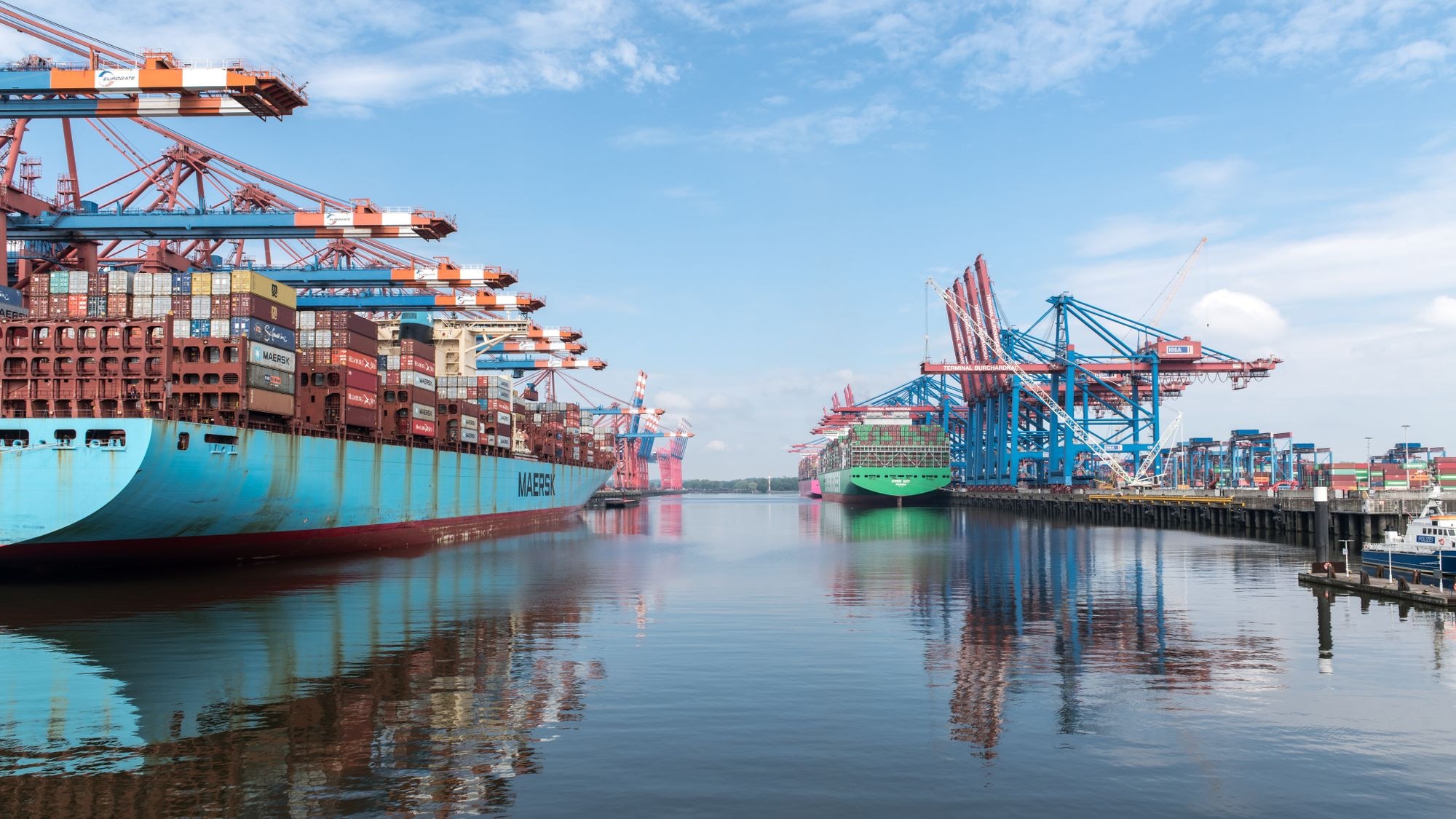
Ocean to an EU port, then overland.
The car ships from the US to a neighboring EU port, the same way it would for Poland, then moves overland into Ukraine. The ocean leg is routine. The overland leg and the destination clearance are where the war-risk handling lives.
Profile A mechanics: via Poland
Load at one of six US container warehouses or five RoRo terminals. Ocean to Gdynia or Gdansk, roughly 20 to 25 days from the East Coast. Carriers include Maersk, MSC, CMA CGM, and Hapag-Lloyd; Maersk in particular routes Ukraine-bound boxes through Gdansk and Gdynia on its own inland services. Then road or rail east across the border to the Ukrainian clearance point.
Customs: the car clears under Ukraine's regime at destination, not in Poland. The bill of lading releases against payment.
Profile B mechanics: via Constanta
Ocean to Constanta in Romania, then overland north into Ukraine. Container is the usual method on both profiles for control and war-risk cover; RoRo where a line and routing support it. Quarter-tank fuel maximum per SOLAS rules on RoRo.
Not available: any direct call or overland approach through Russia or Belarus. The eastern routes are closed and off-limits.
Personal effects permitted in containers, not in RoRo.
Ukraine's own customs, at the end of an overland leg.
The car transits the EU port without importing there and clears under Ukraine's own regime at destination. The cost math is the thing to get right before you buy, because the excise is engine-and-age based and the VAT picture changed in 2026.
The clearance path
Pre-purchase cost check
The desk works Ukraine's stack with the buyer's clearing agent: 10% duty, the excise computed from engine size, fuel type, and age, and 20% VAT. The excise age factor caps at 15 years, so an older big-engine car carries the heaviest excise. EVs pay no duty and minimal excise but now carry the 20% VAT.
US-side preparation
AES filing, ISF where required, HBL issuance, commercial invoice, packing list. Clean title, or a salvage certificate where the car is sold and shipped as salvage. HBL consigned to the Ukrainian buyer or their clearing agent.
EU port transit and overland leg
The car lands at the Polish or Romanian port and moves under transit overland into Ukraine, without importing into the EU country. The overland leg, insurance, and border timing are priced case by case given war conditions.
Ukrainian customs and registration
The car clears at destination under Ukraine's regime: 10% duty, the engine-and-age excise, 20% VAT, plus the registration steps. Euro-2 is the minimum emissions standard, which US cars meet easily. Then the buyer registers and takes plates. LHD.
Required documents
Original title or salvage certificate
Clean title for a car that will register. Salvage certificate where the unit is sold and shipped as salvage.
Commercial invoice on Dapex letterhead
Consignee, vehicle details, declared value, engine size, model year, HBL number. The excise depends on accurate engine and age data.
Packing list
Standard format. Needed when personal effects are co-loaded in a container.
HBL
Consigned to the Ukrainian buyer or their clearing agent. Released after payment of the quoted amount.
What Dapex files, US side
AES filing with US Customs. ISF where required. HBL under Dapex's NVOCC license, consigned to the Ukrainian buyer or their clearing agent. Commercial invoice and packing list on Dapex letterhead, with accurate engine and age data for the excise. Title verification through our title team before pickup, and the cost pre-check with the clearing agent before purchase. Standard consignee screening, and routing that never touches Russia or Belarus. Pre-alert pack to the EU port agent and the overland handler. Dapex's screening reaches the consignee on our BL.
What sells into Ukraine.
Ukraine takes a wide spread of US cars, from economy sedans to electric, plus a heavy flow of salvage for the country's large repair trade. The excise rewards newer and smaller, and EVs remain the most tax-favoured even with VAT back.
Electric, economy, and crossovers.
Electric cars lead, Tesla above all, since EVs pay no duty and minimal excise. Then practical Toyota, Honda, Hyundai, and Kia, and American crossovers and SUVs. Newer and smaller-engine cars carry the lightest excise, so they pencil out best.
Rebuildable cars.
Ukraine has one of the biggest repair-and-rebuild trades in the region, so salvage US cars move in volume. Container is the right method for a non-runner. We ship under a salvage certificate and verify history before pickup.
RHD, and the eastern routes.
RHD cars don't register. Beyond that, the standing Dapex rules hold: clean title or salvage certificate (25-year US Customs exception), no unreleased liens, no personal effects loose in RoRo, and no routing through Russia or Belarus, which on this lane means no direct Black Sea call and no eastern overland approach. Quarter-tank fuel maximum on RoRo per SOLAS.
What moves the rate on this lane.
Two things drive the number: the overland leg and its war-risk conditions, and Ukraine's excise stack at the end. The ocean leg is the routine part.
Our work, our cost.
- Warehouse operations
- Booking fee
- Documentation handling
- Title verification
- HBL issuance
- Cost pre-check with the agent
Carrier and routing-driven.
- Ocean freight (carrier-set)
- Fuel and bunker surcharges
- EU port handling and transit
- Overland leg into Ukraine
- War-risk insurance
- Border and crossing timing
Service standards.
- Compliance
- Documentation accuracy
- Submission urgency
- Dispatch priority
Lane-specific drivers
The overland leg and war risk
This is the variable a normal EU lane doesn't have. The road or rail leg into Ukraine, the insurance, and the border timing move with conditions, so we price the lane case by case rather than off a fixed rate.
Ukraine's excise
The excise is base rate times an age factor times an engine factor, with the age factor capped at 15 years. An older, larger car carries the heaviest excise. EVs pay almost none, which is why they dominate the import flow.
The 2026 VAT change on EVs
20% VAT returned on electric cars in January 2026, so the EV math is less generous than it was, though EVs are still the most tax-favoured category. We use the current rate, not last year's.
Title quality
The buyer runs their own VIN check, so we verify title before pickup and flag any branded history in advance.
Who handles Ukraine accounts.
Ukraine runs through the same two-desk setup as the rest of the region, with the Russian-speaking desk especially active given the language overlap. English through the US desk, Russian or Ukrainian coordination through the Russian-speaking desk and partner handlers. Either owns the file end to end.
Ukraine desk
Lithuania, Latvia, Estonia, Poland, and Ukraine, plus the wider Baltic and Eastern European trade. Handled in English through the US desk or in Russian through the Russian-speaking desk, your choice, with Ukrainian coordination through partner clearing agents. Business hours bridging US and Eastern European time zones, plus extended hours by request.
What the desk owns.
The cost pre-check with the clearing agent before purchase. The routing call between a Polish port and Constanta. File management through BL. Title verification before pickup. EU port agent and overland handler coordination. The honest war-risk conversation: what the lane carries, what the insurance covers, what the timing depends on. Standard screening, no Russia or Belarus leg. Escalation on border or customs holds.
Things buyers ask about the Ukraine lane.
Yes, we can route the lane, on a project basis and with honest caveats. The car comes in through a neighboring EU port, Gdynia or Gdansk in Poland or Constanta in Romania, then overland into Ukraine. The direct Black Sea ports are war-risk constrained, so we don't rely on them.
The Ukrainian Black Sea ports operate under war risk, with insurance and reliability problems that make them unsafe to plan a shipment around. Routing through an EU port and overland is the dependable way in, which is why the carriers themselves do it that way.
10% duty, an excise based on engine size, fuel type, and age, and 20% VAT. The excise rewards newer and smaller cars; the age factor caps at 15 years. EVs pay no duty and minimal excise, though 20% VAT returned on them in January 2026. The desk works the number with the buyer's clearing agent before you buy.
Never. The eastern approaches are closed and off-limits to a US forwarder anyway. The whole point of coming in through Poland or Romania is that it's the clean western route. No leg of this lane touches Russian or Belarusian territory.
Roughly 30 to 50 days, the ocean leg to the EU port plus the overland leg and Ukrainian clearance. War conditions and border timing move it, so the desk gives current numbers on the quote rather than a fixed promise.
Mostly yes. The 20% VAT that returned in January 2026 raised the cost, but EVs still pay no duty and almost no excise, so they remain the most tax-favoured category. Ukraine imported record EV numbers right before the change. The desk runs the current math.
Because of the overland leg and the war-risk handling. The ocean part is the same as a Poland shipment, but the road or rail leg into Ukraine, the insurance, and the border timing add cost and have to be priced case by case rather than off a rate card.
Yes, in volume. Ukraine has one of the biggest repair trades in the region. Container is the right method for a non-runner. We ship under a salvage certificate and verify history before pickup.
Ready to ship to Ukraine?
Send VIN, lot number, vehicle year, engine size, whether it's an EV or hybrid, the named buyer and their region, and the US loading point. We'll work the customs with the clearing agent, choose between a Polish port and Constanta, price the overland leg honestly, verify the title, and quote the full lane.