Middle East / United Arab Emirates
Auto export to the UAE.
The UAE is both a destination market and the largest US-origin re-export hub in the Middle East. Dapex moves cars to Jebel Ali, Hamriyah, Khalifa Port, Khor Fakkan and RAK Port from six container warehouses and five RoRo terminals across the East Coast, Gulf, and West Coast. Registration at destination, or re-export onward through DUCAMZ, JAFZA, Hamriyah, RAK, and SAIF free zones.
For reference purposes only. Regulations, policies, and procedures change constantly. Ensure you verify and validate all requirements for your specific shipments before initiating any.
The UAE lane, in four numbers.
Primary discharge. Hamriyah (Sharjah), Khalifa (Abu Dhabi), RAK Port secondary.
Six container warehouses. Five RoRo terminals: Baltimore, Brunswick, Galveston, Jacksonville, Port Hueneme.
RoRo 22-28. Container 28-35. East Coast origins.
Secondary markets via UAE free zones. East Africa, West Africa, CIS, Iraq, Jordan, South Asia.
Two operational profiles. Both run through Dapex.
Whether a buyer is registering vehicles in the UAE or staging them for onward sale, the US-side operation is the same. The destination configuration is what changes.
Registration at destination.
Vehicle clears mainland UAE customs at port and registers in the destination emirate. Most common when the buyer is the end-user.
- Cleared through your customs agent at port
- Subject to age caps (Dubai RTA strictest) and emission rules
- 5% import duty at clearance
- Buyer needs Emirates ID or trade license at registration
- LHD only for emirate registration
Free zone re-export.
Vehicle consigned to a trading company inside DUCAMZ, JAFZA, Hamriyah, RAK, or SAIF. Sits in the zone until sold to an international buyer, then re-shipped onward. Most common for dealers, traders, and exporters running ongoing volume.
- HBL consigned to the free zone trading company, not an end-buyer
- Vehicle never enters UAE customs territory
- No UAE age caps, emission rules, or duty apply
- RHD and LHD both move (RHD onward to RHD markets)
- Onward sale to East Africa, West Africa, CIS, Iraq, Jordan, South Asia
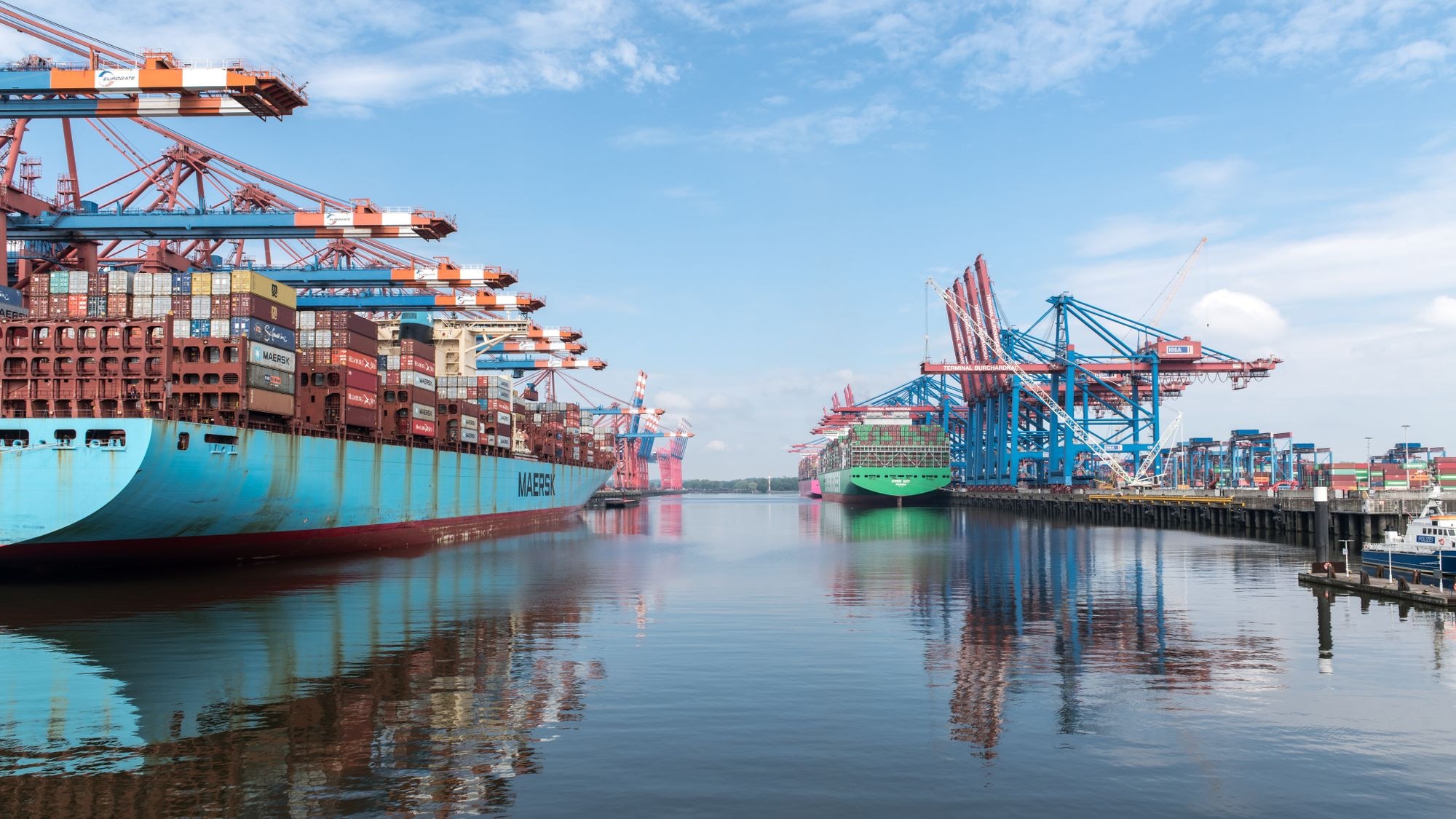
Eleven US loading points. Two methods. Four UAE ports.
The 5-stage chain runs end to end on every shipment. What changes by lane is which US loading point fits your auction footprint, which method makes sense for the vehicle, and which UAE port your consignee specifies.
Container origins
NY/NJ, Savannah, Miami, Houston, Long Beach, Seattle. Six warehouses, container loaded by our crew. Weekly cuts on Maersk, MSC, CMA CGM, Hapag-Lloyd to Jebel Ali.
East Coast routes via Suez when the route is open. When the Red Sea is constrained, carriers reroute around the Cape, adding 10-15 days. We pass routing surcharges through and flag the change before your next booking.
West Coast routes via Asia transshipment (Singapore or Port Klang). Slightly longer baseline at 32-40 days, less exposed to Red Sea volatility.
RoRo origins
Baltimore, Brunswick, Galveston, Jacksonville, Port Hueneme. Five RoRo terminals across the East Coast, Gulf, and West Coast. Baltimore is the largest US auto RoRo terminal by volume.
Carriers: Höegh, Wallenius, ACL, Sallaum, K Line, Grimaldi. Quarter-tank fuel maximum per SOLAS rules on every booking.
Faster baseline transit than container on most lanes (22-28 days East Coast to Jebel Ali). RoRo wins when the vehicle is operational, fits standard dimensions, and the destination handles RoRo cleanly.
Documentation depends on the consignee, not the cargo.
US-side documentation is the same for either profile. What runs after the BL depends on whether the vehicle is clearing UAE customs for registration, or going into a free zone for onward sale.
Required documents (both profiles)
Original title or bill of sale
Exception: vehicles 25+ years can ship under salvage certificate per US Customs rules. Otherwise, clean title required before booking.
Commercial invoice
Issued by Dapex on letterhead. Buyer or free zone consignee, vehicle details, declared value, HBL number.
Packing list
Standard format. Critical when vehicles are co-loaded with personal effects in containers.
HBL
Consigned to the buyer (registration profile) or to the free zone trading company (re-export profile). Released after payment of the quoted amount.
What runs after the BL
Clears UAE customs.
- Your clearing agent files the UAE customs declaration
- 5% import duty paid at clearance
- Vehicle inspection at port (Mulkiya for RTA emirates)
- Buyer presents Emirates ID, passport, or trade license
- Vehicle subject to destination emirate age caps and emission rules (Dubai RTA strictest)
- Registration with the destination emirate's RTA
- LHD only
Bypasses UAE customs.
- Free zone trading company receives at zone yard (DUCAMZ, JAFZA, Hamriyah, RAK, SAIF)
- No UAE customs entry, no duty paid
- No UAE age caps or emission rules apply
- RHD and LHD both permitted
- Free zone trader handles onward sale and prepares re-export documentation
- Onward export under the next-market's import rules
What Dapex files, US side
AES filing with US Customs. ISF where required. HBL issuance under Dapex's NVOCC license. Commercial invoice and packing list on Dapex letterhead. Pre-alert pack to your clearing agent (Profile A) or your free zone consignee (Profile B), with all documents at vessel sailing.
Most cars ship. The variance is by profile.
The same vehicle that won't register in Dubai because it's over the RTA age cap can ship without issue if consigned to DUCAMZ for onward sale to a market with no age limits. Profile changes what's possible.
Mainstream US auction stock.
LHD vehicles, recent model years (1-7 years), sedans, SUVs, light trucks, luxury. Standard auction inventory from Copart, IAAI, Manheim, Adesa ships without complication either way.
Registration constraints.
Vehicles beyond destination-emirate age caps (Dubai RTA strictest; RAK and Ajman more permissive). Vehicles failing emission rules (Euro 4 minimum in some emirates). RHD vehicles, which cannot register in the UAE. Re-export through a free zone is the alternative for any of these.
Re-export possibilities.
Older vehicles, for onward sale to markets without age caps. RHD vehicles, for onward sale to RHD markets in East Africa and elsewhere. Many salvage classifications, for markets that accept rebuilt titles. Universal Dapex rules still hold: clean title or salvage cert (25-year exception), no unreleased liens, no personal effects loose in RoRo.
What moves the rate on this lane.
Wholesale rate structure works the same way on the UAE lane as everywhere else. Locked components stay locked. Pass-through components move with carrier and port pricing. Four things drive variance on this specific lane.
Our work, our cost.
- Warehouse operations
- Booking fee
- Documentation handling
- Dispatch coordination
- HBL issuance
Carrier and port-driven.
- Ocean freight (carrier-set)
- Suez or Cape routing surcharges
- Fuel and bunker surcharges
- Origin port charges (container and RoRo)
- THC at UAE discharge port
- Inland trucking to loading point
Service standards.
- Compliance
- Documentation accuracy
- Submission urgency
- Dispatch priority
Lane-specific drivers
Red Sea routing volatility
When Suez is constrained, container reroutes around the Cape add 10-15 days and trigger carrier routing surcharges. We pass the surcharge through and tell you before your next booking. RoRo lanes through Höegh and Wallenius have shown more stability through recent disruption.
RoRo vs container per-car economics
Container in a shared 40HC is typically lower per-car than RoRo for the same vehicle, especially with 4-car consolidation. RoRo wins on single oversized vehicles, on speed-sensitive shipments, and when the destination clearance prefers RoRo. The desk runs both numbers on quotes for ongoing-volume accounts.
Capacity tightness around UAE peak buying
December through March is heavy on this lane. Wholesale accounts get priority allocation when capacity rations. Pre-book where possible.
Carrier service rotation changes
Carriers occasionally restructure their Middle East loops. Transit times can shift by 2-4 days when a service rotates. We update your account at the next rate notice.
Who handles UAE accounts.
The Arabic-speaking desk runs every UAE account. Same person from the first quote through every BL.
Arabic-speaking Desk
UAE, Saudi Arabia, Jordan, Iraq, Lebanon. Sunday to Thursday business hours in Gulf Standard Time, plus extended hours by request.
What the desk owns.
Quote signing, file management through BL, escalation on title or compliance issues, coordination with your destination agent or free zone consignee. The desk lead's name and direct line are on every quote we send.
Things buyers ask about the UAE lane.
Jebel Ali for DUCAMZ and JAFZA consignees, plus most direct-registration shipments. Hamriyah for Sharjah-based trading companies in SAIF Zone and Hamriyah Free Zone. Khalifa Port for Abu Dhabi consignees. RAK Port for RAK auto zone traders. Tell your account manager who the consignee is, we route accordingly.
No. The license requirement sits with the consignee, not the shipper. For registration, your end-buyer holds the Emirates ID or trade license at clearance. For free zone re-export, the trading company holds the license.
Container makes sense from NY/NJ, Savannah, Miami, Houston, Long Beach, or Seattle, picked based on where your auction freight clusters. RoRo runs through Baltimore (the largest US auto RoRo terminal), Brunswick, Galveston, Jacksonville, or Port Hueneme. The desk picks based on auction location, vehicle type, destination port, and current sailing schedules.
For the registration profile, no. The destination emirate sets that rule. For the re-export profile, yes. The vehicle never enters UAE registration. The free zone trader sells it onward to a market that accepts the model year.
Yes, for re-export through free zones. RHD vehicles cannot register in the UAE. They move through DUCAMZ or other free zones for onward sale to RHD markets in East Africa, South Asia, and elsewhere.
Title branding matters more on Profile B than on Profile A. A vehicle that looks clean-title at Copart but carries a hidden rebuilt branding can collapse a downstream sale when the next-market buyer runs their own VIN check. Our title team runs verification on every wholesale account before pickup and flags issues in advance. This is one of the cost centers we absorb operationally so the shipper doesn't eat it.
The yard is the free zone trader's responsibility, not Dapex's. We stop at port discharge and deliver the HBL to your consignee on arrival. Once they take receipt, the in-zone clock is theirs. Yard demurrage exposure is between you and your consignee.
Carriers reroute around the Cape, adding 10-15 days. Your shipment runs at the rate quoted at booking. We don't back-bill routing surcharges to shipments already in transit. Future bookings will reflect any updated carrier rates, disclosed before you book.
Ready to ship to the UAE?
Send VIN, lot number, and consignee (end-buyer or free zone trader) to the Arabic-speaking desk. Itemized quote signed by your account manager within 4 business hours.