Central Asia / Tajikistan
Auto export to Tajikistan.
Tajikistan is the smallest and most mountainous market in the region, and the hardest to reach. It's landlocked behind other landlocked countries, with high passes and long overland legs between a US port and Dushanbe. Two things make it worth the trouble. It's not in the customs union with Russia, so it's a real destination rather than a side door. And it runs one of the most generous electric-car policies anywhere: no customs duty on EVs, and on newer ones no VAT or excise either. For the right car, the math is very good.
For reference purposes only. Regulations, policies, and procedures change constantly. Ensure you verify and validate all requirements for your specific shipments before initiating any.
The Tajikistan lane, in four numbers.
No seaport. A US car comes through Kazakhstan and Uzbekistan by road to Dushanbe, or over the Kulma pass from China.
Six container warehouses, five RoRo terminals. Containerized for the rail and long road legs.
The longest Central Asia lane. Kazakhstan transit plus the overland legs through Uzbekistan to Dushanbe.
Not EAEU. Conventional cars pay duty plus about 18% VAT. EVs pay no duty, and newer ones no VAT or excise.
Two very different cars on one lane.
Tajikistan's car policy splits sharply between electric and everything else. The country wants a third of its fleet electric by 2030, so it's stripped the tax off EVs while keeping a normal duty-and-VAT load on conventional cars. The two profiles below land at very different costs.
The standout deal in the region.
Electric cars have had no customs duty since 2022, under a long exemption, and since May 2025 newer EVs also skip VAT and excise. There's no recycling fee. For a recent US EV that clears the build-year rule, the landed cost is mostly freight, which is rare anywhere in Central Asia. This is the sharpest reason to run this lane.
- No customs duty on EVs
- Newer EVs: no VAT or excise either
- No recycling fee
- LHD, registered and kept in Tajikistan
A normal import load.
A petrol or diesel car clears under Tajikistan's regular regime: a customs duty in the range of a fifth to a third of value, plus VAT of around 18%, with an excise and an emission floor around Euro 4. Workable for a sensible car, but the EV math is so much better that electric is usually the smarter import where the buyer is open to it.
- Customs duty roughly 20 to 30% of value
- VAT around 18%, plus excise
- Euro 4 emission floor
- Clears at Dushanbe, LHD
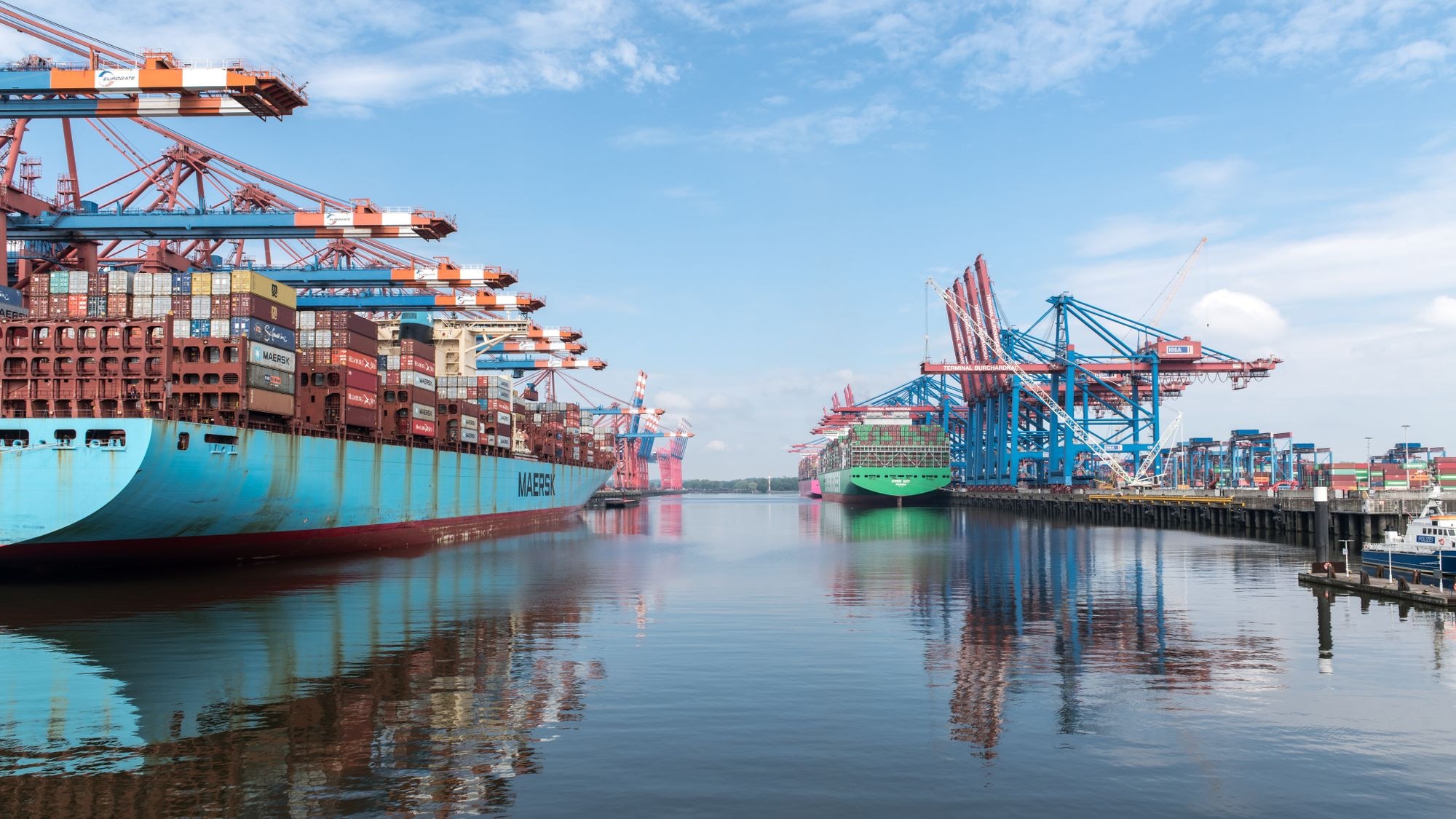
The longest way around, by design.
There's no short route to Tajikistan that a US forwarder can use. The car comes through Kazakhstan, the same clean corridors as the rest of the region, then overland through Uzbekistan to Dushanbe. A direct China road exists but it runs over a high seasonal pass.
Through Kazakhstan and Uzbekistan
Load at one of six container warehouses, then one of the two clean corridors into Kazakhstan: the Caspian Middle Corridor through Poti and Aktau, or the China rail corridor through Lianyungang and Khorgos. From Kazakhstan the car moves overland south through Uzbekistan to Dushanbe. It's the most overland of any lane we run.
Corridor choice: same logic as Kazakhstan, East versus West Coast. The desk prices both.
Transit: roughly 55 to 75 days door to Dushanbe, the longest in the region because of the extra overland country.
The Kulma pass, and what's blocked
There's a direct road from western China into Tajikistan over the Kulma pass, the only land crossing between the two. It's high, remote, and seasonal, so it suits cargo already in China more than a US car, which is usually simpler to rail to Almaty and bring up through Uzbekistan.
Not available: the Russia and Lithuania routes, which cross Russia or Belarus. The Afghanistan border is not a routing option.
Personal effects permitted in containers, not in RoRo.
Tajikistan's own customs, and an easy answer for EVs.
Tajikistan runs its own regime, not the EAEU's, with no pre-shipment certification for used cars. For an EV the clearance is simple and cheap. For a conventional car it's a normal duty-and-VAT calculation. We route the car clean through Kazakhstan with no Russia leg.
The clearance path
US-side preparation
AES filing, ISF where required, HBL issuance, commercial invoice, packing list. Clean title, or a salvage certificate where the car is sold and shipped as salvage. HBL consigned to the Tajik buyer or their clearing agent.
Transit through Kazakhstan and Uzbekistan
The Caspian or China corridor into Kazakhstan, then overland through Uzbekistan to Dushanbe. The bill of lading releases against payment. No leg of the chain touches Russia or Belarus.
Tajik customs at Dushanbe
An EV clears with no customs duty, and a newer one with no VAT or excise either. A conventional car clears under the normal regime: a duty in the range of a fifth to a third of value, VAT around 18%, an excise, and an emission floor around Euro 4. The clearing agent runs the per-vehicle number.
Registration
The buyer registers the car and takes plates in Tajikistan. LHD is the norm.
Required documents
Original title or salvage certificate
Clean title for a car that will register. Salvage certificate where the unit is sold and shipped as salvage for repair.
Commercial invoice on Dapex letterhead
Consignee, vehicle details, declared value, HBL number.
Packing list
Standard format. Needed when personal effects are co-loaded in a container.
HBL
Consigned to the Tajik buyer or their clearing agent. Released after payment of the quoted amount.
What Dapex files, US side
AES filing with US Customs. ISF where required. HBL under Dapex's NVOCC license, consigned to the Tajik buyer or their clearing agent. Commercial invoice and packing list on Dapex letterhead. Title verification through our title team before pickup. Routing chosen to avoid any Russia or Belarus leg, with standard consignee screening. Pre-alert pack to the Kazakhstan and Uzbekistan transit handlers and the Dushanbe clearing agent. The Russian-speaking desk owns the file end to end.
Electric first, practical second.
The tax policy tilts this lane hard toward electric, and the rough roads favor durable, practical cars. Big thirsty engines make little sense for a small, mountainous, fuel-conscious market.
Toyota and durable practical cars.
Toyota leads, Camry, Corolla, RAV4, and the Land Cruiser and Prado that handle mountain roads. Honda, Hyundai, and Kia. Practical sedans and SUVs that are cheap to run and easy to service, repaired from US auction stock where the duty stays sensible.
EVs, the whole point.
With duty gone and VAT and excise waived on newer cars, a recent US EV can land at close to freight cost, the best electric math in the region. The national target of a third of the fleet electric by 2030 means real demand. The desk confirms the build-year rule before quoting.
Big old engines, and the rules.
Large old petrol cars don't suit the market or the duty. Beyond that, the standing Dapex rules hold: clean title or salvage certificate (25-year US Customs exception), no unreleased liens, no personal effects loose in RoRo, no routing through Russia or Belarus. Quarter-tank fuel maximum on RoRo per SOLAS.
What moves the rate on this lane.
Freight is the big number here, because the route is long and the EV duty is zero. The two levers are the corridor choice and whether the car is electric.
Our work, our cost.
- Warehouse operations
- Booking fee
- Documentation handling
- Title verification
- Routing and corridor selection
- HBL issuance
- Sanctions screening
Carrier and routing-driven.
- Ocean freight (carrier-set)
- Fuel and bunker surcharges
- Caspian ferry or China rail charges
- Port and crossing handling
- Overland through Kazakhstan
- Road legs through Uzbekistan to Dushanbe
- Inland trucking to loading point
Service standards.
- Compliance
- Documentation accuracy
- Submission urgency
- Dispatch priority
Lane-specific drivers
Distance is the cost
Tajikistan is the longest haul in the region, the Kazakhstan corridor plus a full transit of Uzbekistan. The freight and the days are the main number, more than customs on an EV. We price the whole door-to-Dushanbe chain as a range.
Electric versus conventional
An EV lands at close to freight cost; a conventional car adds duty, about 18% VAT, and excise. Where the buyer is open to electric, that single choice can be the biggest saving on the lane.
Corridor choice by US coast
East Coast cars usually favor the Caspian corridor, West Coast cars the China rail corridor. The desk prices both into the door-to-Dushanbe number.
Title quality
The buyer runs their own VIN check, so we verify title before pickup and flag any branded history in advance, which matters more on a long, expensive-to-reverse haul.
Who handles Tajikistan accounts.
The Russian-speaking desk runs every Tajikistan account. It chooses the corridor, coordinates the long overland chain through Kazakhstan and Uzbekistan, runs the EV question, and prices the door-to-Dushanbe number.
Russian-speaking Desk
Tajikistan, Uzbekistan, Kazakhstan, Kyrgyzstan, Turkmenistan, Georgia, Armenia, Azerbaijan, and the wider CIS. Business hours bridging US and Central Asian time zones, plus extended hours by request. Tajik and Russian coordination through partner clearing agents in Dushanbe.
What the desk owns.
Corridor call through Kazakhstan: Caspian versus China rail. The long overland leg through Uzbekistan. File management through BL. Title verification before pickup. The EV build-year question. Kazakhstan and Uzbekistan transit handler coordination and the Dushanbe clearing agent. Clean routing, no Russia or Belarus leg, with standard screening. Escalation on customs or border holds.
Things buyers ask about the Tajikistan lane.
Through Kazakhstan, then overland through Uzbekistan to Dushanbe. The car takes one of the two clean corridors into Kazakhstan, the Caspian Middle Corridor through Poti and Aktau, or the China rail corridor through Lianyungang and Khorgos, then moves south by road. There's a direct China road over the Kulma pass, but for a US car the Kazakhstan route is usually simpler.
For the right car, close to it. EVs have had no customs duty since 2022, and since May 2025 newer ones skip VAT and excise too, with no recycling fee. So a recent US EV can land at close to freight cost, which is the best electric math in Central Asia. The desk confirms the build-year rule, since the VAT and excise waiver depends on the car being new enough.
A normal load: a customs duty in the range of a fifth to a third of value, VAT of around 18%, plus an excise, with an emission floor around Euro 4. Workable for a sensible car, but where the buyer is open to electric, the EV route is usually far cheaper. The clearing agent runs the exact number.
Geography. Tajikistan is landlocked behind other landlocked countries, so a US car has to cross Kazakhstan and then Uzbekistan to reach Dushanbe, over mountainous roads. That's one more country of overland than Uzbekistan and two more than the Caucasus. We price the whole chain as a range and flag current border conditions.
No. Tajikistan isn't in the Eurasian customs union and doesn't even border Russia, so the leakage risk that makes us screen Kazakhstan and Kyrgyzstan so hard barely applies. We route clean and screen as standard, but Tajikistan is a genuine destination market.
Left-hand drive. Tajikistan drives on the right, and US auction cars are LHD, so it isn't an issue on this lane.
No. Any cheaper overland route crosses Russia or Belarus, and a US-licensed forwarder can't move cargo across either. We go through Kazakhstan and Uzbekistan instead. It's longer, and it keeps the chain clean.
Roughly 55 to 75 days door to Dushanbe, the longest of the Central Asia lanes because of the extra overland country. The desk gives current numbers on the quote, since the Caspian ferry, the China crossings, and the Uzbekistan road legs all move.
Ready to ship to Tajikistan?
Send VIN, lot number, vehicle year, whether it's electric, and the US loading point to the Russian-speaking desk. We'll confirm the EV treatment, price both corridors door to Dushanbe, verify the title, and screen the routing before we book.