Middle East / Saudi Arabia
Auto export to Saudi Arabia
Saudi Arabia is the second-largest Middle East destination for US-origin vehicles. Deep demand for trucks, SUVs, full-size pickups, and luxury sedans. Dapex moves cars to Jeddah Islamic Port, King Abdulaziz Port (Dammam), and King Abdullah Port from six container warehouses and five RoRo terminals. SABER/SASO certification coordinated before sailing, so cargo clears at destination instead of sitting at port.
For reference purposes only. Regulations, policies, and procedures change constantly. Ensure you verify and validate all requirements for your specific shipments before initiating any.
The Saudi lane, in four numbers.
Red Sea, ~65% of Saudi sea imports. King Abdulaziz (Dammam) and King Abdullah Port secondary.
Six container warehouses. Five RoRo terminals: Baltimore, Brunswick, Galveston, Jacksonville, Port Hueneme.
RoRo 20-28. Container 24-32. East Coast via Red Sea.
PCoC and SCoC obtained before sailing. Without it, cargo doesn't clear customs.
Largely a destination market. Bonded zones for the rest.
Saudi Arabia is mostly a destination economy for US-origin vehicles. Cars land at Jeddah, Dammam, or King Abdullah Port for Saudi dealers, fleet operators, and end-buyers. A smaller share routes through Saudi's bonded zones for onward re-export to GCC neighbors, Yemen, Iraq, Jordan, and Syria.
Registration in Saudi Arabia.
Vehicle clears Saudi customs, gets registered through the Saudi traffic department (Mururiyah). Most common when the buyer is a Saudi dealer, fleet operator, or end-buyer.
- SABER/SASO pre-certification mandatory before shipment arrives
- 5-year age cap on passenger cars, light vehicles, trucks (hard rule)
- Cars younger than 30 and older than 5 years can be imported ONLY if these cars are student's cars and they have proof that the cars can be imported to Saudi Arabia from their government.
- 5% customs duty + 15% VAT at clearance
- LHD only. No RHD exceptions for registration.
- GCC emission and safety standards required
- Buyer needs Iqama or Saudi commercial registration
Bonded zone for re-export.
Vehicle enters a Saudi bonded zone at Jeddah (LogiPoint), Dammam (Dammam Bonded Re-Export Zone), or King Abdullah Port. Customs duties suspended. Onward re-export to GCC neighbors, Yemen, Iraq, Jordan, Syria, and African markets.
- HBL consigned to the bonded zone operator or trading company
- No customs entry, duties and VAT suspended in zone
- No 5-year age cap applies (cargo not entering local market)
- Non-resident merchants can operate without Saudi commercial registration
- Smaller share by volume than UAE free zones, useful for traders running multi-country footprints
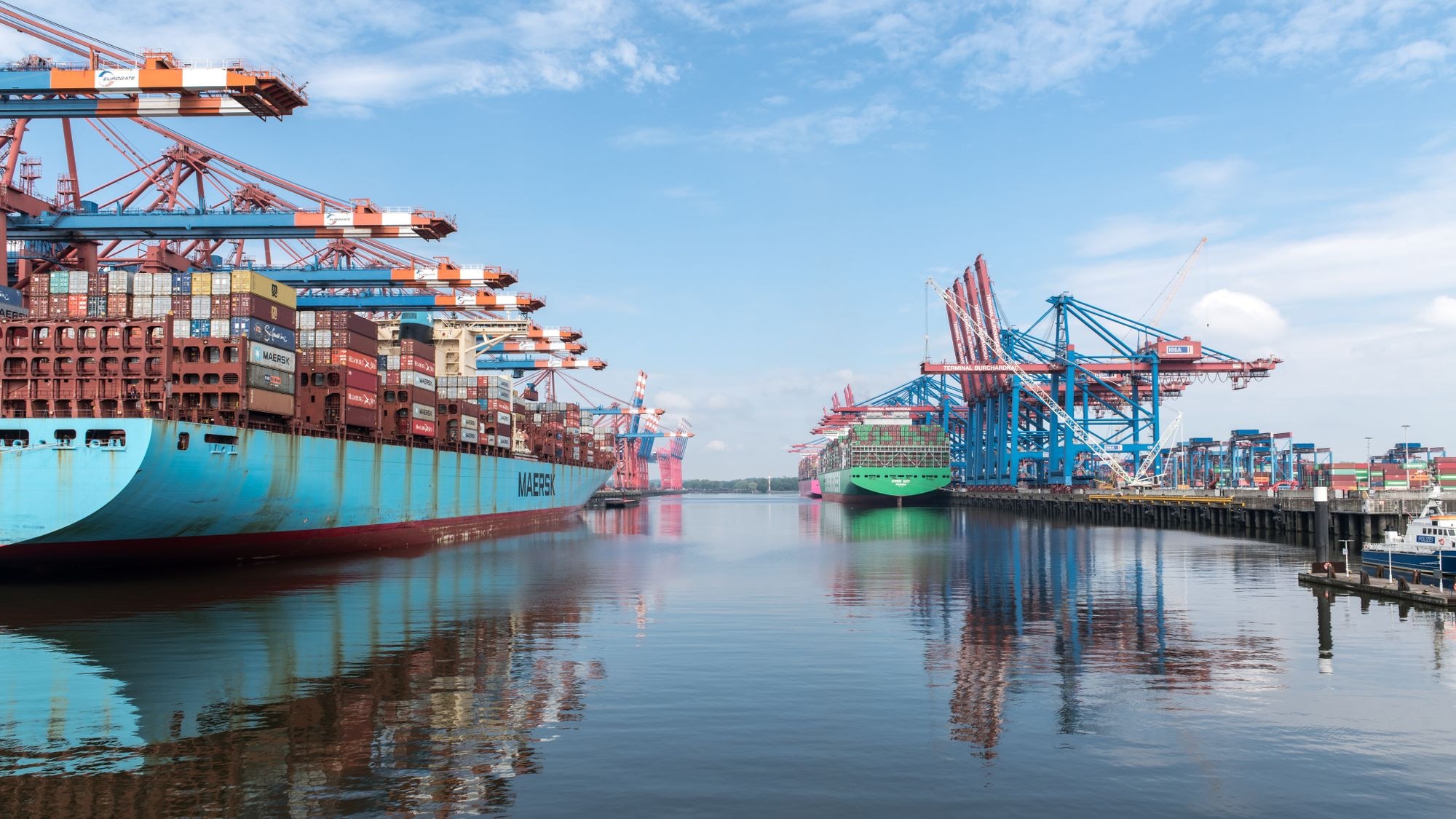
Eleven US loading points. Two methods. Three Saudi ports.
The 5-stage chain runs end to end. What changes by lane is which US loading point fits your auction footprint, which method makes sense for the vehicle, and which Saudi port your consignee specifies.
Container origins
NY/NJ, Savannah, Miami, Houston, Long Beach, Seattle. Six warehouses, container loaded by our crew. A 40HC commonly takes four cars, up to five small ones, fewer with full-size pickups and SUVs, and how the box is loaded decides the per-car number. Weekly cuts on Maersk, MSC, CMA CGM, Hapag-Lloyd to Jeddah. Direct service to Dammam via Suez + Gulf rotation on selected services.
East Coast routes via Suez when the Red Sea is open. When constrained, carriers reroute around the Cape, adding 12-18 days on Saudi lanes (more than the UAE delta because Jeddah is on the Red Sea itself). We pass routing surcharges through and flag the change before your next booking.
West Coast via Asia transshipment. Baseline 30-38 days. Less exposed to Red Sea volatility.
RoRo origins
Baltimore, Brunswick, Galveston, Jacksonville, Port Hueneme. Five RoRo terminals. Baltimore handles the largest share of Saudi-bound RoRo by volume.
Carriers: Höegh, Wallenius, ACL, Sallaum, K Line, Grimaldi. Quarter-tank fuel maximum per SOLAS rules. RoRo wins on full-size pickups, large SUVs, and operational vehicles where dimensions push container economics.
Hajj season (roughly June through September) creates congestion at Jeddah. We flag bookings during peak Hajj and route through Dammam or King Abdullah Port when timing matters.
SABER is the gate.
Every vehicle entering Saudi Arabia for registration needs SABER certification before the cargo arrives at port. Without it, cargo sits at port accruing storage charges until certification is obtained, or the shipment gets refused. We coordinate pre-certification with the buyer's chosen SASO-approved certification body before the vessel sails.
What SABER is, operationally
What SABER is
The platform SABER is Saudi Arabia's electronic conformity assessment system, managed by SASO (Saudi Standards, Metrology and Quality Organization).
The two certificates
PCoC (Product Certificate of Conformity) is issued per vehicle model. SCoC (Shipment Certificate of Conformity) is issued per shipment and references the PCoC. Both required for customs clearance.
The certification body
Certificates are issued by SASO-approved certification bodies. TÜV Rheinland is the most common for used auto imports. Intertek, Bureau Veritas, and others also operate in the program. Each certification body has its own inspection process and pricing.
The inspection
Inspection can be conducted at US origin or at Saudi destination depending on the certification body. Pre-shipment inspection at origin is faster on landing but more expensive per vehicle. Destination inspection adds time at port.
The cost
Allow $200-500 per vehicle for SABER certification, paid to the certification body. Bulk certifications negotiate down. Dapex doesn't charge for SABER, but we coordinate it on wholesale accounts.
Required documents (both profiles)
Original title or bill of sale
Saudi customs requires clean title. The US-side 25-year salvage exception does not provide a workaround for Saudi's separate 5-year age cap.
Commercial invoice
Issued by Dapex on letterhead. Buyer or bonded zone consignee, vehicle details, declared value, HBL number.
Packing list
Standard format.
HBL
Consigned to the Saudi buyer (Profile A) or to the bonded zone operator (Profile B). Released after payment of the quoted amount.
Saudi-side identification
Profile A: buyer's Iqama (residency permit) or Saudi commercial registration. Profile B: bonded zone operator's customs code.
SABER PCoC and SCoC
For Profile A. Numbers referenced on the customs declaration. Profile B in a bonded zone may not require SABER if the cargo is not entering the Saudi market.
What Dapex files, US side
AES filing with US Customs. ISF where required. HBL issuance under Dapex's NVOCC license. Commercial invoice and packing list on Dapex letterhead. Pre-alert pack to your clearing agent or bonded zone consignee. Plus coordination with the buyer's SASO-approved certification body for SABER pre-certification, tracked against the sailing date. The Saudi desk handles this end-to-end on wholesale accounts.
The 5-year age cap shapes most decisions.
Saudi Arabia's 5-year age cap is the most consequential constraint in this market. It's a hard rule for the registration profile, with narrow exceptions. The bonded-zone profile is the workaround for older vehicles, when the onward market accepts them.
1-5 year old US auction stock, LHD.
Sedans, SUVs, trucks, full-size pickups. American trucks and large SUVs in particular demand: Ford F-150, Chevrolet Suburban and Tahoe, GMC Yukon, Toyota Land Cruiser, Cadillac Escalade. Luxury sedans (Mercedes, Lexus, BMW) also strong. Standard auction inventory under 5 years moves without complication.
Registration constraints.
Vehicles over 5 years old (hard cap; narrow exceptions for classic cars over 30 years, premium-residency holders paying compensation fee). RHD vehicles, which cannot register in Saudi. Vehicles failing GCC emission standards. Anything without SABER pre-cert at port arrival. For vehicles outside the 5-year window, bonded-zone routing is the alternative when an onward market accepts them.
Bonded zone possibilities.
Older vehicles can transit if destined for an onward market that accepts them (Iraq, Yemen, some African markets). RHD vehicles can technically transit, though RHD onward markets are typically routed through UAE free zones instead. Universal Dapex rules still hold: clean title or salvage cert, no unreleased liens, no personal effects loose in RoRo.
What moves the rate on this lane.
Wholesale rate structure works the same way on the Saudi lane as everywhere else. Locked components stay locked. Pass-through components move with carrier and port pricing. Four things drive variance on this specific lane.
Our work, our cost.
- Warehouse operations
- Booking fee
- Documentation handling
- Dispatch coordination
- HBL issuance
- SABER coordination support
Carrier, port, certification body.
- Ocean freight (carrier-set)
- Suez or Cape routing surcharges
- Fuel and bunker surcharges
- Origin port charges
- THC at Jeddah or Dammam
- SABER certification fee (paid to the certification body)
- Inland trucking to loading point
Service standards.
- Compliance
- Documentation accuracy
- Submission urgency
- Dispatch priority
Lane-specific drivers
Red Sea routing volatility
Jeddah is on the Red Sea. When Suez is constrained, carriers reroute around the Cape, adding 12-18 days on Saudi lanes. Cape rerouting affects Saudi more than Gulf-coast destinations because the Jeddah lane is more exposed.
SABER certification cost and timing
$200-500 per vehicle for the certification, paid to the SASO-approved body. Pre-shipment certification at origin runs faster on landing but costs more per vehicle. Destination certification adds time at port. We coordinate either path.
Hajj season operational impact
June through September pilgrimage period creates congestion at Jeddah Islamic Port. Vessel slot availability tightens. Time-sensitive shipments should book early or route through Dammam or King Abdullah Port.
Truck and SUV economics
Saudi takes more full-size pickups and large SUVs per shipment than most other lanes. Per-car RoRo costs vary by vehicle dimensions. The desk runs both container and RoRo numbers on quotes when the vehicle mix is heavy on trucks.
Who handles Saudi accounts.
The Arabic-speaking desk runs every Saudi account. Same person from the first quote through every BL.
Arabic-speaking Desk
Saudi Arabia, UAE, Jordan, Iraq, Yemen, Lebanon, and the wider Arabic-speaking markets. Sunday to Thursday business hours in Arabia Standard Time, plus extended hours by request.
What the desk owns.
Quote signing, file management through BL, SABER pre-certification coordination with the buyer's chosen SASO-approved body, escalation on title or compliance issues, coordination with your clearing agent or bonded zone consignee.
Things buyers ask about the Saudi lane.
Jeddah for western Saudi destinations (Riyadh, Mecca, Medina, Taif, Jeddah itself). Dammam (King Abdulaziz Port) for the Eastern Province (Dhahran, Khobar, inland gateway to eastern Riyadh) and Gulf-bound onward freight. King Abdullah Port for the Rabigh corridor and King Abdullah Economic City. The desk picks based on consignee location and current sailing schedules.
Yes. SABER PCoC and SCoC must be obtained before the cargo arrives at Saudi port. Without certification, cargo sits at port accumulating storage charges until certification is issued, or the shipment is refused. We coordinate pre-certification with the buyer's SASO-approved certification body before vessel sailing.
We coordinate it. SABER certification is issued by SASO-approved certification bodies (TÜV Rheinland, Intertek, Bureau Veritas, and others) directly to the importer. Dapex shares the documentation each body needs and tracks COC issuance against the sailing date. The certification fee is paid to the body, not to Dapex. We don't mark it up.
For Saudi registration, the 5-year age cap is a hard rule for passenger cars, light vehicles, and trucks. Narrow exceptions: classic cars over 30 years, and premium-residency holders paying a compensation fee. For onward re-export through a Saudi bonded zone (or UAE free zone, which is often the better path), older vehicles can transit if the onward market accepts them. The desk will tell you whether bonded-zone routing makes sense for your case.
For registration, no. Saudi Arabia requires LHD with no exceptions. For bonded-zone onward re-export, technically yes, but the onward markets that take RHD are limited from Saudi. Most RHD onward re-export goes through UAE free zones instead.
With SABER pre-certification in hand, clearance at Jeddah or Dammam typically takes 3-7 business days from vessel arrival. Without it, indefinite, until certification is obtained. Hajj season can extend timelines by an additional 7-14 days. Pre-arranging SABER is the most important variable in clearance speed.
June through September is the pilgrimage period. Jeddah Islamic Port runs reduced operational hours and higher congestion at peak Hajj. Vessel slots tighten. The desk flags Hajj-period bookings at quote and recommends routing through Dammam or King Abdullah Port when timing matters.
Yes. Recent ZATCA rules allow non-resident merchants to operate within bonded zones without a Saudi commercial registration, subject to customs system registration. The bonded zone operator handles the in-zone receipt and onward re-export documentation. The HBL is consigned to the bonded zone operator or trading company.
Ready to ship to Saudi Arabia?
Send VIN, lot number, and consignee (Saudi end-buyer with Iqama, fleet operator, or bonded zone trader) to the Arabic-speaking desk. SABER coordination starts before the vessel sails.