West & North Africa / Morocco
Auto export to Morocco
Morocco is a real destination market reached by direct ocean call to Casablanca or Tanger Med, and it has one feature no other country on this list shares: a free trade agreement with the US. A car that qualifies as US-origin under the FTA rules can clear at a reduced or zero customs duty, which changes the math entirely against the standard 10 to 17% base rate. The catch is age. Morocco caps used imports at under five years and enforces it. So the two questions on every Morocco shipment are whether the car is inside five years and whether it qualifies for the FTA.
For reference purposes only. Regulations, policies, and procedures change constantly. Ensure you verify and validate all requirements for your specific shipments before initiating any.
The Morocco lane, in four numbers.
Casablanca is the main car port, with Tanger Med, one of the Mediterranean's largest, also in use. Direct ocean call from the US. No transit country.
Six container warehouses, five RoRo terminals. RoRo for running cars; container for high-value, performance, or co-loaded cargo.
Among the shortest African lanes from the US East Coast, since Morocco sits at the mouth of the Mediterranean. The desk quotes current.
Under 5 years from manufacture, enforced. Base duty 10-17% plus 20% VAT, but the US FTA can cut the duty toward zero on qualifying US-origin cars. LHD.
A recent-car market with an American advantage.
Morocco wants late-model cars and screens out anything five years or older. Within that window, the FTA is what makes the US lane interesting: most exporting countries fight Morocco's duty, but a US-origin car that meets the agreement's rules of origin can land at a far lower rate. That's a real edge, and it rewards knowing which cars qualify and having the paperwork to prove it.
US-origin, duty advantage.
A car built in the US that meets the FTA rules of origin, inside the five-year cap, clears at a reduced or zero customs duty with the right certificate of origin. You still pay the 20% VAT, but losing most of the base duty is the difference that makes Morocco pencil out.
- US-origin under FTA rules
- Reduced or zero customs duty
- Certificate of origin required
- Inside the 5-year cap, LHD
Non-qualifying, full duty.
A car inside the five-year cap that doesn't qualify for the FTA, a non-US build, or one that can't prove origin, clears at the standard 10 to 17% base duty plus 20% VAT. Still a viable import where the car is right, just without the FTA discount, so the landed cost runs higher.
- Base duty 10-17% plus 20% VAT
- No FTA discount without origin proof
- Still inside the 5-year cap
- Returning residents get a duty cut
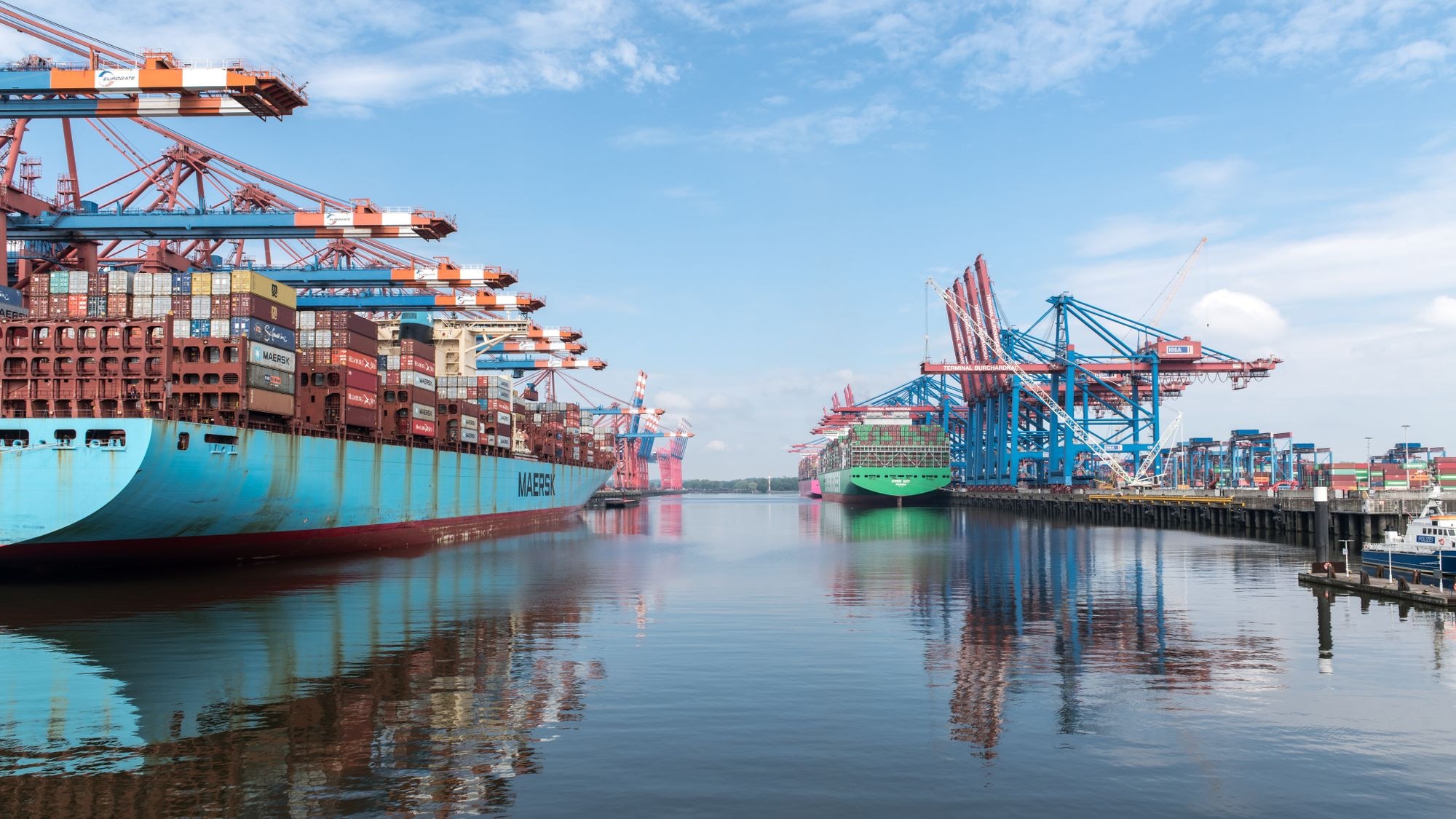
A short ocean call to Casablanca.
Morocco sits at the mouth of the Mediterranean, so this is one of the faster African lanes. The car sails direct to Casablanca or Tanger Med and clears there. The Morocco specifics are the age check and the FTA origin question.
Container origins
Load at one of six container warehouses: NY/NJ, Savannah, Miami, Houston, Long Beach, Seattle. Container suits high-value, performance, and luxury cars, or anything co-loaded with parts. A 40HC commonly takes four cars, five when they're small enough to nest, three when they're full-size, loaded to the safest high-density fit. Carriers include Maersk, MSC, CMA CGM, and Hapag-Lloyd.
Transit: roughly 12 to 22 days from the East Coast, among the shortest African lanes.
Customs: base duty 10-17% plus 20% VAT, or a reduced FTA rate with a valid certificate of origin.
RoRo origins
Five RoRo terminals: Baltimore, Brunswick, Galveston, Jacksonville, Port Hueneme. RoRo is the cheaper choice for a clean running car inside the cap. Lines into the West Mediterranean include Grimaldi and others. Quarter-tank fuel maximum per SOLAS rules.
Not carried: anything five years or older, which Morocco refuses, and RHD.
Personal effects permitted in containers, not in RoRo. Non-manipulation number should be listed on B/L and need to be added prior to the vessel departure for RoRo shipments. The non-manipulation certificate is prepared by the customs authorities of the transit country.
Moroccan customs, the cap, and the FTA.
Morocco pairs a strict 5-year cap with the standard duty stack, and the FTA sits on top as an opportunity rather than a default. A technical inspection and conformity check apply at the port. The work before shipping is confirming age, then confirming whether the FTA can be claimed.
The clearance path
Pre-purchase age and origin check
The desk reads the build year and origin off the VIN, confirms the car is under five years, and works out whether it qualifies for the FTA reduced duty or clears at the standard rate, so the landed cost is clear before you bid.
US-side preparation
AES filing, ISF where required, HBL issuance, commercial invoice, packing list, and the certificate of origin where the FTA is claimed. Clean title. HBL consigned to the Moroccan buyer or their clearing agent.
Customs at Casablanca or Tanger Med
The car clears the base duty plus 20% VAT, or the reduced FTA rate against a valid certificate of origin. The bill of lading releases against payment. A licensed Moroccan clearing agent files it, documents in French or Arabic.
Inspection and registration
The car passes the Moroccan technical inspection and conformity check, then the buyer registers. LHD. US-spec cars may need minor lighting adjustments.
Required documents
Original clean title
Clean title required. The VIN drives the age check and the FTA origin determination.
Certificate of origin
Needed to claim the FTA reduced duty. Establishes that the car meets the agreement's US-origin rules.
Commercial invoice on Dapex letterhead
Consignee, vehicle details, declared value, HBL number. Drives the duty assessment.
Bill of lading, French or Arabic clearance
HBL consigned to the buyer or their clearing agent. The desk coordinates the French or Arabic paperwork with the Moroccan agent.
ICE number
Mandatory for shipments to Morocco. ICE, the new customs regulation implemented by Moroccan customs, states that all documents for shipments imported to Morocco should have the ICE number of the consignee (receiver). ICE (Identifiant Commun de l'Entreprise) field length must be 15 or 16 digits and format is NNNNNNNNNNNNNNN or NNNNNNNNNNNNNNNN.
What Dapex files US-side
AES filing with US Customs. ISF where required. HBL under Dapex's NVOCC license, consigned to the Moroccan buyer or their clearing agent. Commercial invoice and packing list on Dapex letterhead, with the certificate of origin where the FTA is claimed. Title verification through our title team before pickup, the VIN-based age check, and the FTA origin determination before purchase. Standard consignee screening. Pre-alert pack to the Casablanca or Tanger Med clearing agent. The Arabic-speaking desk, working in French where needed, owns the file end to end.
What sells into Morocco.
A recent-car market, so the lane is late-model, clean stock. The FTA tilts it toward US-built cars, where the duty advantage is real.
Late-model sedans and SUVs.
Recent Toyota, Honda, Hyundai, and Kia, plus US-built SUVs and crossovers that may qualify for the FTA. Inside the five-year window, clean-title, and able to pass the Moroccan inspection.
US-built cars and EVs.
Cars built in US plants that qualify for the reduced FTA duty are the sharpest buys. Electric vehicles benefit from Moroccan incentives too, worth checking on the right car. High-value units go container.
Five years or older, RHD.
Anything five years or older is refused, and RHD isn't registered. Beyond that, the standing Dapex rules hold: clean title (25-year US Customs exception), no unreleased liens, no personal effects loose in RoRo. Quarter-tank fuel maximum on RoRo per SOLAS.
What moves the rate on this lane.
A short, clean ocean lane. Freight is freight; the variable that decides the all-in cost is whether the FTA applies, which can swing the duty from near zero to 17%.
Our work, our cost.
- Warehouse operations
- Booking fee
- Documentation handling
- Title verification
- HBL issuance
- Age and FTA origin pre-check
Carrier and routing-driven.
- Ocean freight (carrier-set)
- Fuel and bunker surcharges
- Casablanca or Tanger Med handling
- Container versus RoRo choice
- Base duty or FTA rate, plus 20% VAT
- Inland delivery within Morocco
Service standards.
- Compliance
- Documentation accuracy
- Submission urgency
- Dispatch priority
Lane-specific drivers
The FTA duty swing
A qualifying US-origin car can clear at zero or near-zero customs duty; a non-qualifying one pays 10 to 17%. On a late-model car that's a large difference, so the origin determination is the single biggest lever.
The 5-year cap
Firm and enforced. A car five years or older is refused, so we confirm age off the VIN before purchase.
Short transit
Morocco's position at the Mediterranean mouth keeps freight time and cost among the lowest of any African lane.
Container versus RoRo
A running car usually lands cheapest on RoRo. Performance, luxury, and high-value cars go container. The desk prices both.

Who handles Morocco accounts.
The Arabic-speaking desk runs every Morocco account, working in French where needed. It confirms the age, runs the FTA origin determination, and works the duty before you bid.
Arabic-speaking Desk
Morocco, Algeria, and the Maghreb, alongside the UAE, Saudi Arabia, Jordan, Iraq, Yemen, Lebanon, and the wider Arabic-speaking markets. Arabic, French, and English. Casablanca and Tanger Med clearing-agent coordination on Dapex's Morocco files.
What the desk owns.
VIN-based age check and the FTA origin determination before quoting. The duty pre-check on both the base and FTA rates. Certificate-of-origin handling. French or Arabic clearance paperwork. Title verification before pickup. Container-versus-RoRo call. File management through BL.
Things buyers ask about the Morocco lane.
Casablanca, the main car port, with Tanger Med, one of the Mediterranean's largest, also in use. Both are direct ocean calls from the US, container or RoRo, with no transit country.
Under five years from the year of manufacture, enforced. A car five years or older is refused, so we confirm age off the VIN before you buy.
The US-Morocco FTA, in force since 2006 with the tariff phase-down completed in 2021, lets a qualifying US-origin car clear at zero or near-zero customs duty instead of the standard 10 to 17%. You still pay the 20% VAT, but on a late-model car that duty saving is large.
It has to meet the agreement's rules of origin, generally a car built in the US, and you need a valid certificate of origin to claim it. A US-branded car assembled abroad may not qualify. We check the build origin off the VIN before you bid.
It clears at the standard base duty of 10 to 17% plus 20% VAT. Still a viable import where the car is right, just at a higher landed cost than an FTA-qualifying one.
Yes, returning residents get a duty reduction on a personal vehicle. The desk can walk through the conditions and paperwork for that.
Left-hand drive. Morocco drives on the right, and US auction cars are LHD, so this isn't an issue on this lane.
Roughly 12 to 22 days from the East Coast, among the shortest African lanes, then inspection, customs, and registration. The desk gives current numbers on the quote.
Ready to ship to Morocco?
Send VIN, lot number, vehicle year, and the US loading point. We'll confirm the car is under five years, run the FTA origin determination, work both the base and FTA duty, verify the title, and quote door to Casablanca or Tanger Med.