Eastern Europe & Caucasus / Lithuania
Auto export to Lithuania.
Lithuania is an EU member with its own deepwater port at Klaipeda, so a US car arrives by direct ocean call and clears straight into the European customs union. The math is the EU standard: 10% duty on the landed value, then 21% Lithuanian VAT. There's no age cap, the gate is emissions and a technical inspection. One thing to be clear about up front. Klaipeda is also the biggest Baltic hub for cars moving onward to the CIS, and a lot of that flow runs through Belarus into Russia. Dapex doesn't touch that. We ship cars that stay in Lithuania and register there.
For reference purposes only. Regulations, policies, and procedures change constantly. Ensure you verify and validate all requirements for your specific shipments before initiating any.
The Lithuania lane, in four numbers.
Lithuania's own deepwater port. Direct ocean call from the US, container and RoRo. No overland leg to reach the country.
Six container warehouses, five RoRo terminals. RoRo is the usual choice for running cars into Klaipeda.
East Coast to Klaipeda runs about 18 to 25 days. West and Gulf Coast are longer. The desk gives current numbers on the quote.
10% duty on CIF, then 21% VAT on duty-inclusive value. No age cap. The real gate is EU emissions and the technical inspection.
A destination market with a transit hub bolted onto it.
Two very different things happen at Klaipeda, and the difference decides whether a car is a Lithuania job or someone else's. Cars that register and stay in Lithuania are the lane below. Cars that land at Klaipeda only to move onward to Central Asia or the Caucasus, often through Belarus, are not a Lithuania service, and the route most of that traffic uses is one a US forwarder can't run anyway.
Cars that stay and get plates.
The straightforward case. A US car lands at Klaipeda, clears EU customs at 10% duty plus 21% VAT, passes the technical inspection, and registers with the Lithuanian transport authority. LHD, which is what US auction cars already are. This is the lane Dapex runs.
- 10% EU duty on CIF, 21% VAT on top
- No age cap, emissions and inspection gate
- Headlight and fog-lamp work often needed
- LHD, registered and kept in Lithuania
Cars headed onward to the CIS.
Klaipeda's larger role in the US-car trade is as a staging port for cars moving on to Kazakhstan, Georgia, Armenia, and the rest. That onward leg overwhelmingly runs through Belarus and into Russia. We don't route that, and a car we deliver to a Klaipeda trader for re-export is a trader's onward booking, not our service for the destination. If the destination is really Central Asia or the Caucasus, we ship it there directly on a clean corridor.
- Onward CIS flow mostly crosses Belarus
- A US forwarder can't run that leg
- We ship the real destination directly
- See the Kazakhstan and Caucasus pages
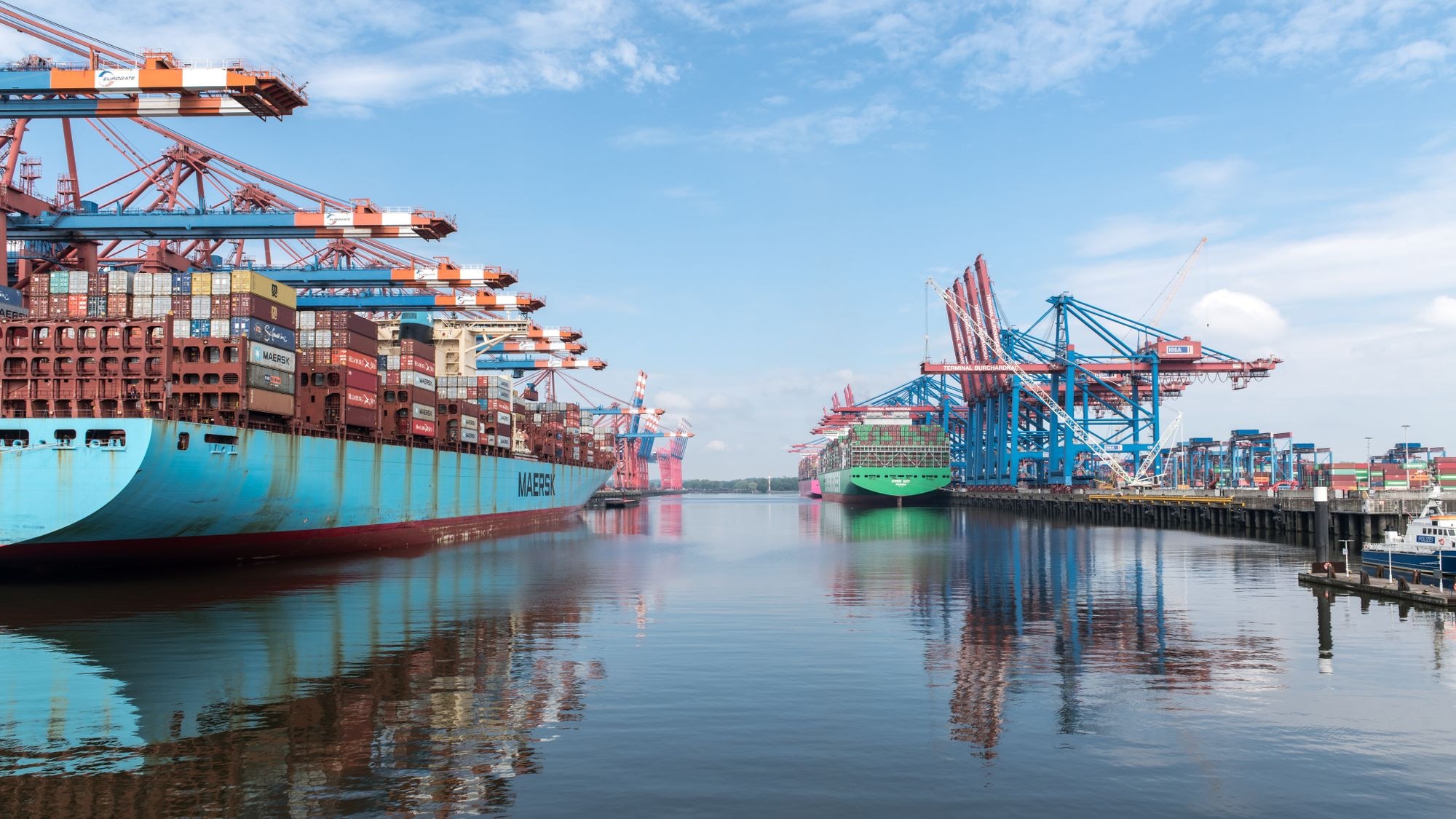
A direct ocean call. No overland to reach the country.
Lithuania is the easy half of this region. The car sails from the US straight to Klaipeda and clears there. No transit country, no border crossing, no ferry. The choice is container or RoRo, and the rest is EU customs and a technical inspection.
Container origins
Load at one of six container warehouses: NY/NJ, Savannah, Miami, Houston, Long Beach, Seattle. Container is the right method for non-running salvage, high-value cars, or anything co-loaded with parts. A 40HC commonly holds four cars, five when they're small enough to nest, three when they're full-size, loaded to the safest high-density fit. Carriers on the North Europe lane include Maersk, MSC, CMA CGM, and Hapag-Lloyd.
Transit: roughly 18 to 25 days from the East Coast, longer from the Gulf and West Coast.
Customs: 10% duty on the CIF value, then 21% VAT on the duty-inclusive value, paid at Klaipeda.
RoRo origins
Five RoRo terminals: Baltimore, Brunswick, Galveston, Jacksonville, Port Hueneme. RoRo is the cheaper, simpler choice for a running car. Lines into Northern Europe include Hoegh, Wallenius, and Grimaldi. Quarter-tank fuel maximum per SOLAS rules.
Not available: the Klaipeda-to-CIS rail option that crosses Belarus. We don't run any leg through Russia or Belarus.
Personal effects permitted in containers, not in RoRo.
EU customs at Klaipeda, then the inspection.
There's no pre-shipment certification for a US car bound for Lithuania the way Saudi or Nigeria demand. The work is EU customs clearance at the port and the roadworthiness inspection before registration. The number to get right before you buy is the duty-and-VAT stack, and whether the car will pass emissions.
ICS2 pre-arrival declaration
The European Union implemented a new customs pre-arrival security and safety program — Import Control System 2 (ICS2) that requires an Entry Summary Declaration (ENS) with additional safety and security data. The following must be provided for shipments to Europe prior to loading to avoid delays and fines: full name and address of the consignee including P.O. Box number, postal code, and sub-division code; and the Economic Operator Registration and Identification (EORI) number of the consignee.
Buyer and seller information is defined per Regulation (EU) 2446/15: the "seller" is the last known entity by whom the goods are sold or agreed to be sold to the buyer; the "buyer" is the last known entity to whom the goods are sold or agreed to be sold.
The clearance path
Pre-purchase cost check
Before you commit, the desk works the 10% duty and 21% VAT on the landed value, and flags any car likely to struggle with EU emissions or need expensive lighting work. That's what decides whether a US auction price is still a bargain after Klaipeda.
US-side preparation
AES filing, ISF where required, HBL issuance, commercial invoice, packing list. Clean title, or a salvage certificate where the car is sold and shipped as salvage. HBL consigned to the Lithuanian buyer or their customs broker.
EU customs at Klaipeda
The car clears import: 10% duty on CIF, then 21% VAT on the duty-inclusive value. The bill of lading releases against payment. A Lithuanian customs broker files the entry and pays the duty and VAT.
Technical inspection and registration
US documents are translated by a sworn translator. The car passes the Lithuanian technical inspection, which usually means headlight adjustment or replacement, a rear fog lamp, and a speedometer that reads km/h. Then the buyer registers with the transport authority and takes plates. LHD.
Required documents
Original title or salvage certificate
Clean title for a car that will register. Salvage certificate where the unit is sold and shipped as salvage for repair.
Commercial invoice on Dapex letterhead
Consignee, vehicle details, declared value, HBL number. The customs value drives both duty and VAT, so the figures have to be right.
Packing list
Standard format. Needed when personal effects are co-loaded in a container.
HBL
Consigned to the Lithuanian buyer or their customs broker. Released after payment of the quoted amount.
What Dapex files, US side
AES filing with US Customs. ISF where required. HBL under Dapex's NVOCC license, consigned to the Lithuanian buyer or their customs broker. Commercial invoice and packing list on Dapex letterhead. Title verification through our title team before pickup, and the duty-and-VAT pre-check before purchase. Standard consignee screening, and no routing that touches Russia or Belarus. Pre-alert pack to the Klaipeda agent. If a buyer's real plan is onward movement to the CIS, we say so and point to the destination page, because Dapex's screening reaches the consignee on our BL, not a downstream re-export buyer.
What sells into Lithuania.
No age cap means older American cars can register, unlike the Gulf markets. The constraint is emissions and the cost of passing inspection. The cars that move are a mix of practical family vehicles, salvage rebuilds, and the American models that are simply cheaper bought from a US auction than from a European dealer.
Practical and American-priced.
Toyota Camry, Corolla, RAV4, Highlander. Honda CR-V and Civic. The American cars where the US auction price beats the European listing even after duty, VAT, and freight: Ford, Jeep, Tesla and other EVs, and full-size SUVs for buyers who want them.
Rebuildable cars.
Lithuania has a deep repair trade, so salvage and lightly-damaged US cars move well for rebuild and resale. Container is the right method for a non-runner. We ship under a salvage certificate and verify history before pickup so nothing surprises the buyer.
RHD, and the Belarus route.
RHD cars can't first-register in Lithuania. Beyond that, the standing Dapex rules hold: clean title or salvage certificate (25-year US Customs exception), no unreleased liens, no personal effects loose in RoRo, and no routing through Russia or Belarus, including the Klaipeda-to-CIS rail line. Quarter-tank fuel maximum on RoRo per SOLAS.
What moves the rate on this lane.
This is a clean ocean lane, so the freight is the freight. The variables that matter are the carrier market into North Europe, the container-versus-RoRo choice, and the EU tax stack at the end.
Our work, our cost.
- Warehouse operations
- Booking fee
- Documentation handling
- Title verification
- HBL issuance
- Cost pre-check
Carrier and routing-driven.
- Ocean freight (carrier-set)
- Fuel and bunker surcharges
- Container versus RoRo choice
- Klaipeda port handling
- Inland trucking to loading point
- Inland delivery within Lithuania
Service standards.
- Compliance
- Documentation accuracy
- Submission urgency
- Dispatch priority
Lane-specific drivers
The EU tax stack
10% duty plus 21% VAT is a fixed share of the landed value, but it's a big share, so the customs value matters. We declare it straight and price it into the door number rather than letting it surprise the buyer at the port.
Container versus RoRo
A running car usually lands cheapest on RoRo. Salvage, high-value, or co-loaded cargo goes container. The desk prices both.
Inspection cost
Headlights, a rear fog lamp, and a km/h speedometer are common before a US car passes the Lithuanian inspection. On some models that's trivial, on others it adds up. Worth knowing before you bid.
Title quality
The buyer runs their own VIN check, so we verify title before pickup and flag any branded history in advance.
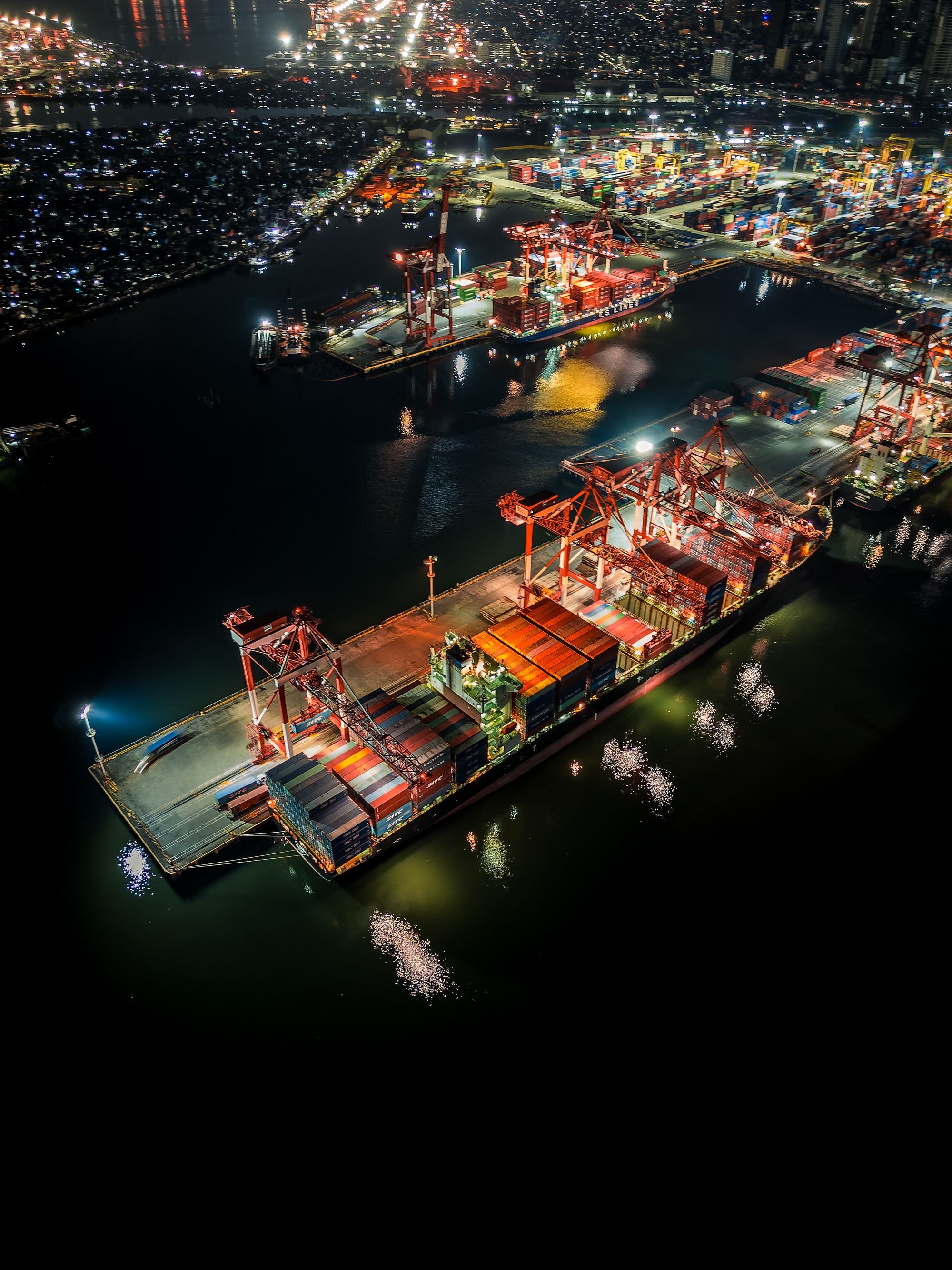
Who handles Lithuania accounts.
Lithuania accounts run through two desks. The English-speaking US desk handles dealers and English-language buyers, and the Russian-speaking desk handles the large Russian-speaking trade in the Baltics. Either one owns the file end to end.
Lithuania desk
Lithuania, Latvia, Estonia, Poland, and Ukraine, plus the wider Baltic and Eastern European trade. Handled in English through the US desk or in Russian through the Russian-speaking desk, your choice. Business hours bridging US and Eastern European time zones, plus extended hours by request. Lithuanian customs-broker coordination at Klaipeda through partner agents.
What the desk owns.
The duty-and-VAT pre-check before purchase. Container-versus-RoRo call. File management through BL. Title verification before pickup. Klaipeda customs-broker coordination. The honest redirect when a buyer's real destination is the CIS: we point to the Kazakhstan or Caucasus page and a clean corridor rather than route through Belarus. Escalation on customs or inspection holds.
Things buyers ask about the Lithuania lane.
Klaipeda, Lithuania's own deepwater port. It's a direct ocean call from the US, container or RoRo, with no transit country and no overland leg to reach Lithuania.
The EU standard: 10% import duty on the CIF value, then 21% Lithuanian VAT on the duty-inclusive value. The desk runs the exact number on your specific car before you buy, so the auction price plus freight plus tax is clear up front.
No. Unlike the Gulf markets, Lithuania has no maximum vehicle age for registration. The real gate is the technical inspection, which checks emissions and roadworthiness. Most US cars need headlight work, a rear fog lamp, and a km/h speedometer to pass.
Not the way most of that trade runs, which is overland through Belarus. A US-licensed forwarder can't move cargo across Belarus or Russia, and Lithuanian authorities have been actively breaking up that re-export scheme. If your real destination is Central Asia or the Caucasus, we ship there directly on a clean corridor. See the Kazakhstan and Caucasus pages.
Yes, and they're a real part of the lane. Lithuania has a deep repair trade, so damaged and rebuildable US cars sell well. Container is the right method for a non-runner. We ship under a salvage certificate and verify history before pickup.
Left-hand drive. Lithuania drives on the right and won't first-register an RHD car, and US auction cars are LHD, so this isn't usually an issue on the US lane.
RoRo is cheaper and simpler for a running car. Container is the choice for salvage, non-runners, high-value cars, or anything shipped with parts. The desk prices both and recommends the cheaper fit.
Roughly 18 to 25 days from the East Coast to Klaipeda, longer from the Gulf and West Coast. Then customs clearance, the inspection, and registration on the ground. The desk gives current numbers on the quote.
Ready to ship to Lithuania?
Send VIN, lot number, vehicle year, engine size, whether it's an EV or hybrid, and the US loading point. We'll run the duty and VAT before you buy, price container against RoRo, verify the title, and quote door to Klaipeda. If your plan is actually onward to the CIS, we'll tell you straight and point you at the right destination quote.