Central Asia / Kyrgyzstan
Auto export to Kyrgyzstan.
Kyrgyzstan is a small market with a big recent history. For two years it was the main side door for cars heading to sanctioned Russia: low clearance costs, an open customs border to Russia, and brokers who treated the country as a paperwork stop. Russia shut that loophole in 2024 and the re-export volume collapsed. What's left is the genuine domestic buyer in Bishkek and Osh, and that's who Dapex serves. The country is landlocked with no rail of its own yet, so a US car reaches it through Kazakhstan on a clean corridor. We screen this lane harder than any other.
For reference purposes only. Regulations, policies, and procedures change constantly. Ensure you verify and validate all requirements for your specific shipments before initiating any.
The Kyrgyzstan lane, in four numbers.
No seaport, no direct rail yet. A US car comes through Kazakhstan, off the Caspian or China corridor, then by road to Bishkek.
Six container warehouses, five RoRo terminals. Containerized for the rail and road legs through Kazakhstan.
Kazakhstan transit time plus the short road leg south to Bishkek. Longest of the Central Asia lanes.
Eurasian customs and 12% VAT, both lighter than Russia's, which is exactly why this lane was abused. Open border to Russia, so we screen hard.
One real buyer, one we won't serve.
A country of about seven million people imported on the order of 79,000 cars in 2023, a fortyfold jump in a year. The numbers tell the story on their own: most of those cars weren't for Kyrgyzstan. They were clearing cheap customs in Bishkek and driving on to Russia. Dapex serves the first profile below and refuses the second.
The business Dapex runs.
A genuine buyer in Bishkek or Osh, importing a car to register and drive in Kyrgyzstan. Lighter Eurasian customs and a 12% VAT make a clean US car competitive, and the EV incentive helps. The car comes through Kazakhstan on a clean corridor and clears in Kyrgyzstan. This is the real market, smaller than the headline numbers but real.
- Through Kazakhstan, then road to Bishkek
- EAEU customs and 12% VAT on a US car
- EV and series-hybrid duty-free quota, residents only
- Named buyer, real address, registers locally
The business Dapex refuses.
A car cleared in Bishkek on paper and driven straight to Russia, exploiting the open customs border and the cheaper Kyrgyz clearance. This was the bulk of the trade until 2024, when Russia added a fee on cars cleared elsewhere in the union and the flow collapsed. We don't touch it, and we read a thin answer on the buyer or destination as a reason to walk.
- Kyrgyzstan as a paperwork stop, not a destination
- Onward to Russia through the open union border
- A sanctions problem for a US forwarder, so we refuse
- Listed here so the line is clear up front
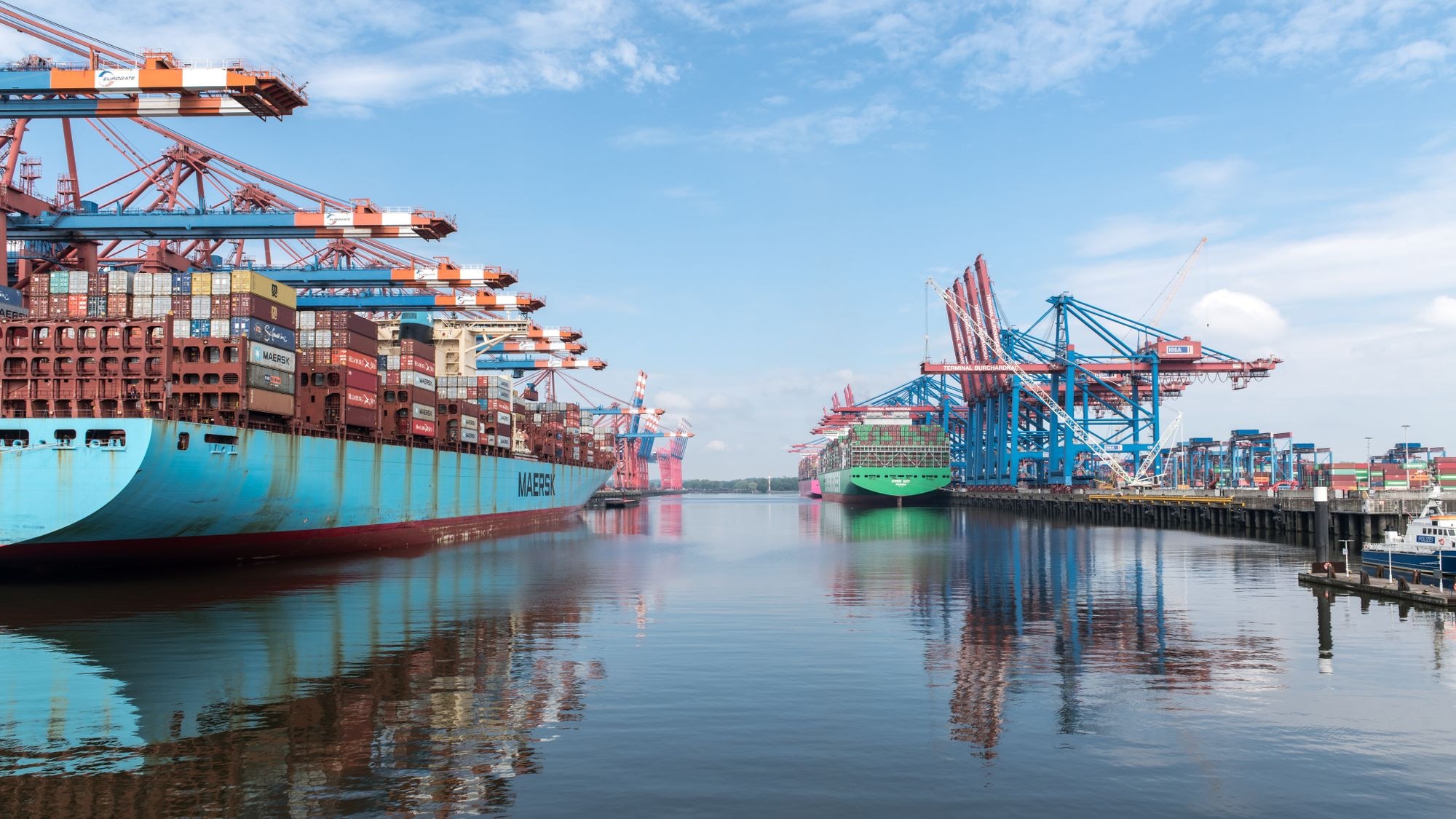
There's no direct way in. Everything comes through Kazakhstan.
Kyrgyzstan has no seaport and no through rail of its own yet, so the routing is the Kazakhstan routing plus a short road leg. The clean corridors are the same two we run for Kazakhstan, and the Russia and Lithuania routes are off the table for the same reason: they cross Russia or Belarus.
Through Kazakhstan
A US car loads at one of our six container warehouses and takes one of the two clean corridors into Kazakhstan: the Caspian Middle Corridor through Poti, Azerbaijan, the Caspian ferry, and Aktau, or the China rail corridor through Lianyungang and the Khorgos crossing. From Almaty it's a short road leg south across the border to Bishkek.
Corridor choice: same logic as Kazakhstan. East and Gulf Coast cars usually favor the Caspian; West Coast cars often favor China rail. The desk prices both.
Transit: roughly 50 to 65 days door to Bishkek, the Kazakhstan time plus the road leg.
The direct China road, and what's coming
There's also a direct road link from western China over the Torugart and Irkeshtam passes into Kyrgyzstan, used for cargo moving straight from Xinjiang. For a US car already railed to Almaty, the short road from Kazakhstan is usually simpler than trucking the high passes.
What's coming: the China-Kyrgyzstan-Uzbekistan railway broke ground in 2024. If it's built, it would give Kyrgyzstan a direct rail line from China and change this routing. It's years off, so we plan around today's roads.
Not available: the Russia and Lithuania routes, which cross Russia or Belarus.
Light customs, heavy screening.
Kyrgyzstan's customs and VAT are genuinely lighter than Russia's, which is the whole reason the conduit existed. There's no pre-shipment certification regime. The work on this lane isn't the paperwork, it's the screening: a named domestic buyer, a real destination, and a hard no on anything bound for Russia.
The clearance path
US-side preparation and the buyer check
AES filing, ISF where required, HBL issuance, commercial invoice, packing list. Clean title or salvage certificate. Before we book, we want a named buyer with a real Bishkek or Osh address who is registering the car locally, not a broker who won't name the end owner.
Transit through Kazakhstan, no Russia leg
The car takes the Caspian or China corridor into Kazakhstan, then the road south to Bishkek. The bill of lading releases against payment. Nothing on the chain touches Russia or Belarus.
EAEU customs in Kyrgyzstan
The car clears as an import from a third country: the Eurasian customs tariff, lighter than Russia's, plus 12% VAT. EVs and series hybrids of recent build can clear duty-free under Kyrgyzstan's annual EAEU quota, for permanent residents only, not transferable to Russian citizens. The clearing agent runs the per-vehicle number.
Registration
The buyer registers the car and takes plates in Kyrgyzstan. LHD is the norm.
Required documents
Original title or salvage certificate
Clean title for a car that will register. Salvage certificate where the unit is sold and shipped as salvage for repair.
Commercial invoice on Dapex letterhead
Consignee, vehicle details, declared value, HBL number. We invoice at real value, since undervaluation is exactly the practice that put this lane under scrutiny.
Packing list
Standard format. Needed when personal effects are co-loaded in a container.
HBL
Consigned to the named Kyrgyz buyer or their clearing agent. Released after payment of the quoted amount.
What Dapex files, US side
AES filing with US Customs. ISF where required. HBL under Dapex's NVOCC license, consigned to the named Kyrgyz buyer or their clearing agent. Commercial invoice at true value and packing list on Dapex letterhead. Title verification through our title team before pickup. Routing chosen to avoid any Russia or Belarus leg. Consignee and final-destination screening against the Russia direction, applied harder here than on any other lane. Pre-alert pack to the Kazakhstan transit handlers and the Bishkek clearing agent. The Russian-speaking desk owns the file end to end.
The genuine domestic market is the whole point.
Stripped of the re-export trade, Kyrgyzstan is a modest market that buys practical cars and, increasingly, electric ones. The lighter customs help a clean US car compete, as long as the buyer and destination check out.
Toyota, Honda, and Korean.
Toyota Camry, RAV4, Corolla, and Prius. Honda. Lexus higher up. Hyundai and Kia, Nissan. Practical sedans and compact SUVs for the domestic buyer, repaired from US auction stock where the landed math works against the lighter Kyrgyz customs.
EVs and series hybrids.
The EAEU duty-free quota covers recent-build electric cars and series hybrids, residents only, not transferable to Russian buyers. Within the quota that's a real saving and has driven a wave of electric imports. The desk checks whether a given car and buyer qualify before quoting.
Russia-bound, Russia-transit, and the rules.
Nothing bound for Russia, no broker who won't name the buyer, and no routing through Russia or Belarus. Beyond that, the standing Dapex rules: clean title or salvage certificate (25-year US Customs exception), no unreleased liens, no personal effects loose in RoRo. Quarter-tank fuel maximum on RoRo per SOLAS.
What moves the rate on this lane.
The freight is the Kazakhstan freight plus a short road leg, so the corridor choice drives most of it. The customs side is lighter than its neighbors, but the screening overhead is real and we don't cut it.
Our work, our cost.
- Warehouse operations
- Booking fee
- Documentation handling
- Title verification
- Routing and corridor selection
- HBL issuance
- Sanctions screening
Carrier and routing-driven.
- Ocean freight (carrier-set)
- Fuel and bunker surcharges
- Caspian ferry or China rail charges
- Port and crossing handling
- Overland through Kazakhstan
- Road leg to Bishkek
- Inland trucking to loading point
Service standards.
- Compliance
- Documentation accuracy
- Submission urgency
- Dispatch priority
Lane-specific drivers
The Kazakhstan corridor, plus a short road
Most of the freight is the Kazakhstan number, Caspian or China rail by US coast, and then a short road leg from Almaty to Bishkek. The corridor choice is the biggest lever, the same as on the Kazakhstan lane.
Lighter customs, but real
The Eurasian tariff and the 12% VAT are lighter than Russia's, which helps a clean car compete. The clearing agent still runs the per-vehicle number, and the EV quota can remove the duty entirely on a qualifying car.
The screening overhead
This lane carries more diligence than others: a named buyer, a verified destination, true-value invoicing. That's deliberate and it's not negotiable, because the cost of getting it wrong on a US license is far higher than any single shipment.
Title quality
The buyer runs their own VIN check, so we verify title before pickup and flag any branded history in advance.
Who handles Kyrgyzstan accounts.
The Russian-speaking desk runs every Kyrgyzstan account. It chooses the corridor through Kazakhstan, coordinates the handlers and the Bishkek clearing agent, runs the EV-quota question, and owns the screen, which on this lane is the heart of the job.
Russian-speaking Desk
Kyrgyzstan, Kazakhstan, Uzbekistan, Tajikistan, Turkmenistan, Georgia, Armenia, Azerbaijan, and the wider CIS. Business hours bridging US and Central Asian time zones, plus extended hours by request. Kyrgyz and Russian coordination through partner clearing agents in Bishkek.
What the desk owns.
Buyer and destination diligence before booking. Corridor call through Kazakhstan: Caspian versus China rail. File management through BL. Title verification before pickup. True-value invoicing. The EV and series-hybrid quota question. Kazakhstan transit handler and Bishkek clearing agent coordination. Consignee and final-destination screening against Russia, the hardest we run. Escalation on customs holds.
Things buyers ask about the Kyrgyzstan lane.
Through Kazakhstan. The car takes one of the two clean corridors into Kazakhstan, the Caspian Middle Corridor through Poti and Aktau, or the China rail corridor through Lianyungang and Khorgos, then a short road leg south from Almaty to Bishkek. Kyrgyzstan has no seaport and no through rail of its own yet, so there's no direct way in.
Because it was the main car conduit into sanctioned Russia. A country of about seven million imported roughly 79,000 cars in 2023, and most drove on to Russia through the open customs union border. We're a US-licensed forwarder, so a car we move that ends up in Russia is our problem. On this lane we want a named buyer with a real Kyrgyz address who registers the car locally, and we screen every file. The genuine domestic market is welcome.
Largely, yes. In 2024 Russia added a fee on cars cleared elsewhere in the union, which removed the cost advantage, and Kyrgyzstan's share of Russia's car imports fell sharply. That's good for us, because it means the buyers still importing are mostly genuine. We still screen, because the open border hasn't gone away.
Lighter than Russia or Kazakhstan: the Eurasian customs tariff plus a 12% VAT. That lighter load is what made the conduit work, and it's also what makes a clean car competitive for a real Kyrgyz buyer. EVs and series hybrids of recent build can clear duty-free under the annual quota, residents only. The clearing agent runs the per-vehicle number.
No. Both cross Russia or Belarus, the Lithuania route by rail through Belarus, and a US-licensed forwarder can't move cargo across either. We route through Kazakhstan on the Caspian or China corridor instead. It costs more and takes longer, and it keeps the chain clean.
For a qualifying car, yes. The EAEU duty-free quota covers recent-build EVs and series hybrids for permanent residents, not transferable to Russian buyers, and it has driven a lot of electric imports. The catch is the conditions: recent model year, residency, a quota slot. The desk checks whether a given car and buyer qualify before quoting.
Eventually, maybe. The China-Kyrgyzstan-Uzbekistan railway broke ground in 2024 and would give Kyrgyzstan a direct rail line from China if it's completed. That's years away, so for now we plan around the Kazakhstan corridors and the road leg to Bishkek. We'll fold the railway in once it's actually running.
Roughly 50 to 65 days door to Bishkek, the Kazakhstan transit time plus the short road leg south. It's the longest of the Central Asia lanes because it's the Kazakhstan routing with one more step on the end. The desk gives current numbers on the quote.
Ready to ship to Kyrgyzstan?
Send VIN, lot number, vehicle year, the named buyer and their Bishkek or Osh address, whether it's an EV or series hybrid, and the US loading point to the Russian-speaking desk. We'll price the corridor through Kazakhstan, check the EV quota where it applies, verify the title, and screen the file before we book.