Eastern Europe & Caucasus / Georgia
Auto export to Georgia.
Georgia is the used-car hub for the Caucasus and Central Asia. Most cars landing at Poti and Batumi don't stay. They clear as transit or re-export, get repaired at Rustavi, and move on to Armenia, Azerbaijan, Kazakhstan, and Kyrgyzstan. Cars are the country's single largest export. Two situations sit inside one country: re-export, which pays no Georgian duty or excise, and domestic registration, which now pays a steep excise on anything over six years old after the April 2026 tax change. One thing runs through both: Dapex screens for the Russia direction and won't carry a car bound there.
For reference purposes only. Regulations, policies, and procedures change constantly. Ensure you verify and validate all requirements for your specific shipments before initiating any.
The Georgia lane, in four numbers.
Primary auto gateway, container and RoRo. Batumi secondary for western Georgia. Onward overland to the Caucasus and Central Asia.
Six container warehouses. Five RoRo terminals. Container is the workhorse here because so much of the cargo is salvage.
East Coast 25-30, Gulf 28-33, West Coast 35-40. Black Sea via the Mediterranean and the Bosphorus. No Suez exposure.
No age limit to import or transit. Domestic registration needs a 2013-or-newer car (Euro 5), and the April 2026 excise hit anything over six years hard.
Two situations inside one country.
Most US cars arriving in Georgia are passing through, not staying. They clear as re-export or transit, get repaired and detailed at the Rustavi market outside Tbilisi, and ship onward to buyers across the Caucasus and Central Asia. Important note that DAPEX can assist with service directly to Central Asia, so our customers need not worry about transit formalities. A smaller share registers for the Georgian domestic market. The US-side operation is the same for both. What changes is how the car clears at destination and what it costs once it lands.
The hub flow. Most of the volume.
Vehicle lands at Poti or Batumi and clears under transit or re-export status. It never enters Georgian import territory, so no Georgian duty, excise, or VAT applies. Repaired at Rustavi if it's a salvage unit, then exported onward to Armenia, Azerbaijan, Kazakhstan, Kyrgyzstan, and Uzbekistan.
- Exempt from Georgian import duty, excise, and VAT
- No age cap and no Euro 5 requirement on this path
- Salvage and rebuilt-title cars move heavily here
- Onward to the Caucasus and Central Asia by road, car carrier, and Caspian ferry
- Sanctions screen applies: nothing bound for Russia or Belarus, and a receiver with a Russian or Belarus passport will not be accepted
Cars that stay in Georgia.
Vehicle clears Georgian customs for use or sale inside the country. Pays the engine-and-age customs tariff, excise, and 18% VAT. To get plates, the car has to meet Euro 5, which in practice means a 2013-or-newer model, and pass technical inspection.
- Excise by engine size and age, plus 18% VAT
- April 2026: excise on 6-year-plus cars jumped to 4.5 GEL per cm³
- Euro 5 for registration, so 2013 or newer for plates
- LHD strongly favored; RHD taxed at triple the excise
- Hybrids get a 60% excise discount (LHD only); EVs exempt
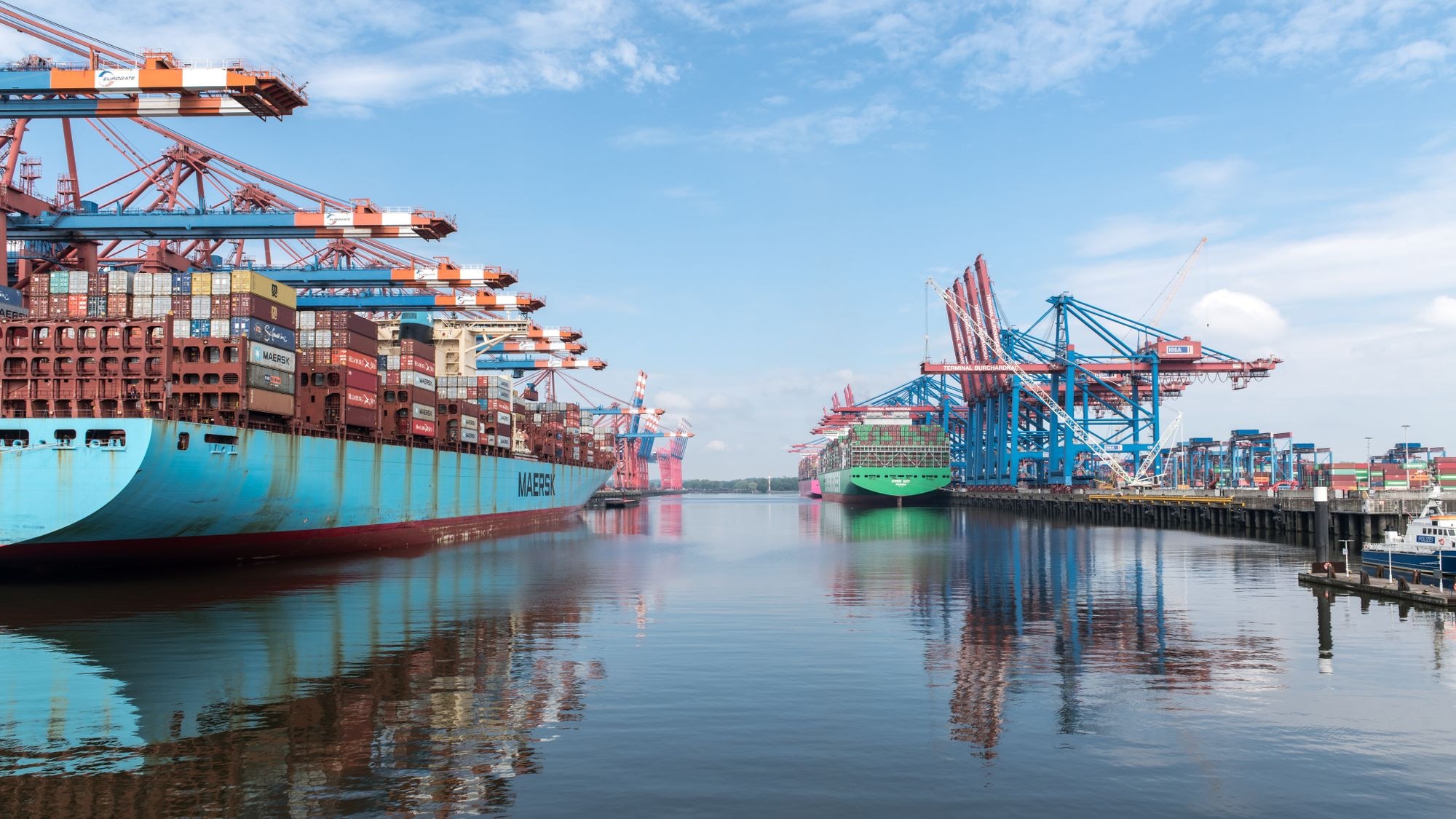
Eleven US loading points. Two methods. Mostly containers.
The Georgia lane runs on containers more than any other reason: a large share of the cargo is salvage that doesn't drive, and direct RoRo service from the US to the Black Sea is thin and usually transships through Europe. The same warehouse and dispatch chain feeds both Poti and Batumi.
Container origins
NY/NJ, Savannah, Miami, Houston, Long Beach, Seattle. Six warehouses, loaded by our crew. Weekly cuts on Maersk, MSC, CMA CGM, Hapag-Lloyd. Salvage and non-running units load fine in containers, and a 40-foot box commonly takes four, five when the cars are small, fewer when they're big. Salvage that sits low or comes apart can pack tighter still, which is where our loading crews earn the per-car number.
Routing: US East Coast to Poti runs across the Atlantic, through Gibraltar, across the Mediterranean, and through the Dardanelles and Bosphorus into the Black Sea. This lane does not touch the Suez Canal or the Red Sea, so it sits out the disruption that hits the Gulf lanes. The Bosphorus is the chokepoint to watch instead, and Black Sea schedules can move on weather and regional conditions.
Transit: East Coast 25-30 days, Gulf 28-33, West Coast 35-40. West Coast usually transships and runs longer.
RoRo origins and onward legs
Baltimore, Brunswick, Galveston, Jacksonville, Port Hueneme. Carriers: Höegh, Wallenius, ACL, Sallaum, K Line, Grimaldi. Quarter-tank fuel maximum per SOLAS rules. RoRo only takes running vehicles, so it's the wrong tool for most salvage. On the US-to-Georgia lane, direct RoRo sailings are infrequent and often transship through a Mediterranean or Turkish port, which adds time. We use it for operational oversized units, trucks, and machinery that won't fit a box.
Onward legs: Armenia by road through the Sadakhlo crossing. Azerbaijan by road through Red Bridge, which is also how most US cars reach Baku since direct container service there is thin. Central Asia along the Middle Corridor, by road to Azerbaijan, Caspian ferry from Baku or Alat to Aktau or Kuryk, then overland into Kazakhstan and beyond. The Caspian leg is the slow, irregular part.
Personal effects permitted in containers, not in RoRo.
No pre-shipment regime. One real gate: the Russia screen.
Georgia has no SABER or SONCAP-style pre-shipment certification. There's no conformity body to clear before the vessel sails. What matters here is which way the car clears at destination, and whether it passes the sanctions screen. We file clean US-side paperwork, then the car either transits duty-free for onward export or clears for domestic registration with excise and VAT.
The clearance path for Profile A (re-export and transit)
US-side preparation
AES filing, ISF where required, HBL issuance, commercial invoice, packing list. Clean title, or a salvage certificate where the car is sold and shipped as salvage. HBL consigned to the Georgian trader or re-export company handling the onward sale.
Discharge at Poti or Batumi
Bill of lading released against payment. The car clears under transit or re-export status rather than import. Georgian clearance at Poti is fast, often inside one to three days for straightforward cargo.
Rustavi staging and repair
Salvage units move to the Rustavi market for repair, detailing, and resale prep. This is where a written-off US auction car becomes a sellable vehicle. No Georgian excise or VAT applies because the car isn't being imported into Georgia.
Onward export
Car exports to the final market. Armenia and Azerbaijan by road. Central Asia along the Middle Corridor across the Caspian. The destination country's own import rules, duty, and age limits then apply, not Georgia's.
The clearance path for Profile B (domestic registration)
US-side preparation
Same filings as above. Clean title needed for a car that's going to register and get plates.
Customs clearance and tax
Customs tariff by engine size and age, then excise, then 18% VAT on the customs value plus excise. As of the April 2026 Tax Code change, excise is 1.5 GEL per cm³ for cars up to six years old and 4.5 GEL per cm³ for anything older, with a 60% discount for left-hand-drive hybrids and full exemption for EVs.
Euro 5 and technical inspection
For road registration, the car must meet Euro 5, which in practice means a 2013-or-newer model, and pass periodic technical inspection. Cars built before 2013 can be imported and physically cleared but won't get Georgian plates. Vehicles 30 years and older are treated as classics and sit outside the Euro 5 rule.
Registration
The buyer registers the vehicle and takes plates. LHD is the norm. RHD carries triple excise and is impractical for domestic use.
Sanctions screening (every file)
Consignee and destination check
We screen the named consignee and the stated final destination before booking. Russian and Belarusian consignees are refused. Georgia's own rules already bar re-export and transit of US cars to Russia and Belarus and bar opening re-export paperwork for citizens of those countries.
The Central Asia question
Cars cleared for Kazakhstan or Kyrgyzstan can move on into Russia through the shared customs union with no further border. We treat a thin or evasive answer on final destination as a reason to decline. Legitimate Central Asia trade is real and large, and that's the business we want. The Russia workaround is not.
Why this protects you
An OFAC problem on a re-export chain doesn't stay with the buyer. It reaches the forwarder and the carrier. Screening up front keeps the file clean for everyone on it.
Required documents
Original title or salvage certificate
Clean title for a car that will register. Salvage certificate where the unit is sold and shipped as salvage for repair and re-export.
Commercial invoice on Dapex letterhead
Consignee, vehicle details, declared value, HBL number.
Packing list
Standard format. Needed when personal effects are co-loaded in a container.
HBL
Consigned to the Georgian trader or re-export company (Profile A) or to the buyer or their clearing agent (Profile B). Released after payment of the quoted amount.
What Dapex files, US side
AES filing with US Customs. ISF where required. HBL under Dapex's NVOCC license, consigned to whichever party the routing requires. Commercial invoice and packing list on Dapex letterhead. Title verification through our title team before pickup, which matters more here than almost anywhere because the cars are auction salvage and the buyers down the chain run their own VIN checks. Consignee and final-destination screening against the Russia and Belarus restriction. Pre-alert pack to the Georgian handler. The Russian-speaking desk owns the file end to end.
Salvage runs the hub. The 2026 excise reshaped the rest.
US auction cars sell into Georgia because they're cheap, repair labor is cheap, and parts for American-market models are everywhere. Roughly four in ten US imports are rebuilt titles. The re-export path takes almost anything. The domestic path got narrower in April 2026, when excise on older cars jumped.
Salvage, repairables, and resale stock.
Toyota across the board: RAV4, Corolla, Camry, Prius. Honda, Hyundai, and Kia. Ford F-150 and Fusion, Chevrolet, Nissan. Higher up the value chain, Mercedes, BMW, Porsche, and Tesla move to traders staging for the Caucasus and Central Asia. Any age, any condition, LHD or RHD, because the destination market's rules apply, not Georgia's.
2013-or-newer, LHD, ideally a hybrid.
For a car that's staying in Georgia, the math favors 2013-or-newer (for Euro 5 plates), six years old or less (to dodge the 4.5 GEL/cm³ excise), left-hand drive, and hybrid (60% excise discount) or electric (excise exempt). A clean LHD hybrid RAV4 or Camry is close to the ideal domestic import now.
Russia-bound, and the universal rules.
We don't carry cars bound for Russia or Belarus, directly or through a customs-union workaround. Beyond that, the standing Dapex rules hold: clean title or salvage certificate (25-year US Customs exception), no unreleased liens, no personal effects loose in RoRo. Quarter-tank fuel maximum on RoRo per SOLAS.
What moves the rate on this lane.
Re-export and domestic registration carry different cost pictures, and the onward leg to Central Asia adds variables most lanes don't have. Here's what we lock, what passes through, and what drives variance on Georgia specifically.
Our work, our cost.
- Warehouse operations
- Booking fee
- Documentation handling
- Title verification
- Dispatch coordination
- HBL issuance
- Sanctions screening
Carrier and routing-driven.
- Ocean freight (carrier-set)
- Fuel and bunker surcharges
- Origin and destination port charges
- THC at Poti or Batumi
- Inland trucking to loading point
- Onward overland and Caspian ferry (Profile A)
Service standards.
- Compliance
- Documentation accuracy
- Submission urgency
- Dispatch priority
Lane-specific drivers
Re-export pays no Georgian tax; domestic registration pays a lot
A salvage car transiting to Kazakhstan never touches Georgian excise or VAT, so its landed cost is mostly freight plus repair. A car registering in Georgia pays customs tariff, excise, and 18% VAT on top. The April 2026 excise jump on six-year-plus cars, up to 4.5 GEL per cm³, hits domestic registration hard and barely touches the re-export flow. Same car, very different number depending on where it's going.
Black Sea routing, not Red Sea
The Georgia lane runs through the Bosphorus, not Suez, so it avoids the Red Sea disruption that reroutes Gulf and East Africa cargo around the Cape. The trade-off is Black Sea weather and the Turkish straits as the chokepoint. We pass routing surcharges through and flag changes before the next booking.
Container over RoRo
Because so much cargo is salvage that doesn't drive, and because direct US-to-Georgia RoRo is thin, container consolidation is usually the better number per car. RoRo earns its place on running oversized units. We quote both where the vehicle qualifies.
The Caspian leg on Central Asia routings
Onward to Kazakhstan, Kyrgyzstan, or Uzbekistan means the Middle Corridor: road to Azerbaijan, ferry across the Caspian, then overland. The ferry runs on an irregular schedule with limited capacity, and a falling sea level is squeezing the Kazakh ports. It's the slow and variable part of the door-to-door, and the desk prices it as a range, not a point.
Title quality on the re-export chain
The buyer at the end of a Caucasus or Central Asia chain runs their own VIN check. A car that looks clean at Copart but carries a branded history can collapse a deal at the far end, and the shipper eats it. Our title team verifies before pickup and flags known issues in advance.
Who handles Georgia accounts.
The Russian-speaking desk runs every Georgia account, which fits the market: most buyers across the Caucasus and Central Asia work in Russian. The desk decides re-export versus domestic registration, coordinates the Georgian handler and the onward leg, and owns the sanctions screen.
Russian-speaking Desk
Georgia, Armenia, Azerbaijan, Kazakhstan, Kyrgyzstan, Uzbekistan, Tajikistan, Turkmenistan, and the wider CIS. Business hours bridging US and Caucasus time zones, plus extended hours by request. Georgian and Azerbaijani coordination available through partner handlers on the ground.
What the desk owns.
Profile call: re-export and transit versus domestic registration. File management through BL. Title verification before pickup. Consignee and final-destination screening against the Russia and Belarus restriction. Poti and Batumi handler coordination. Onward leg coordination to the Caucasus and Central Asia, including the Caspian crossing. Escalation on customs or clearance holds.
Things buyers ask about the Georgia lane.
Poti for almost everything. It's the primary auto gateway, handles container and RoRo, and clears quickly. Batumi is the secondary option, useful for western Georgia and some RoRo rotations. Both feed the Rustavi market near Tbilisi, where most repair and resale happens, and both feed the overland routes onward to the Caucasus and Central Asia.
Not for import or transit. Any year can land and clear at the port. The limit only bites if the car is registering for the Georgian domestic market, where it has to meet Euro 5, which means a 2013-or-newer model to get plates. Cars 30 years and older are treated as classics and sit outside that rule. For re-export, there's no age limit at all, because the car isn't being imported into Georgia.
Georgia rewrote the excise on passenger cars. For domestic import, cars up to six years old pay 1.5 GEL per cm³ of engine, and cars older than six years now pay 4.5 GEL per cm³, a sharp jump from the old graduated rates. Left-hand-drive hybrids keep a 60% discount and EVs are exempt. It only affects cars being imported into Georgia. A car transiting for re-export pays none of it, so the change barely touches the hub flow while it makes older domestic imports much more expensive.
No. We don't move cars bound for Russia or Belarus, directly or through a Kazakhstan or Kyrgyzstan workaround. Georgia itself bans the re-export and transit of US-imported cars to those two countries and won't open re-export paperwork for their citizens. We screen the consignee and the stated final destination on every file. Legitimate trade to Armenia, Azerbaijan, and Central Asia is exactly what this lane is for, and that's what we carry.
Yes, and they're a big part of the lane. Roughly four in ten US imports are rebuilt titles, repaired at Rustavi where labor is cheap and US-market parts are easy to find. Container is the right method for non-running salvage. We ship under a salvage certificate where the car is sold and shipped as salvage, and our title team verifies history before pickup so nothing surprises the buyer down the chain.
Georgia drives on the right, so LHD is the norm and RHD carries triple excise for domestic registration, which makes it impractical to keep in the country. RHD still moves through Georgia for re-export to right-hand-drive markets. For the US lane it's mostly academic, since US auction cars are LHD.
Along the Middle Corridor. Road from Georgia into Azerbaijan, then a ferry across the Caspian Sea from Baku or Alat to Aktau or Kuryk in Kazakhstan, then overland into Kazakhstan, Kyrgyzstan, or Uzbekistan. The Caspian crossing is the slow, irregular link, with limited ferry capacity and falling water levels at the Kazakh ports. The desk prices the onward leg as a range and flags current conditions on the quote.
No. Cargo to Georgia routes through the Mediterranean and the Bosphorus into the Black Sea, not through the Suez Canal and Red Sea. So it sits out the rerouting that adds time and cost on the Gulf and East Africa lanes. The chokepoint to watch on this lane is the Turkish straits and Black Sea weather, not Suez.
Ready to ship to Georgia?
Send VIN, lot number, vehicle year, the destination market (Georgia, or onward to Armenia, Azerbaijan, or Central Asia), and consignee details to the Russian-speaking desk. We'll quote re-export or domestic registration based on where the car is really going, run the title check, and screen the file before we book.