West & North Africa / Côte d'Ivoire
Auto export to Côte d'Ivoire.
Côte d'Ivoire is a real destination market and a regional gateway, reached by direct ocean call to Abidjan, one of West Africa's busiest ports. The rule that shapes everything is a strict 5-year age cap on passenger cars, 7-year age cap for minibus/trucks up to 5 tons and 10-year age cap for bus/trucks from 5 to 10 tons maximum, set by decree and enforced hard: a car over the limit faces a heavy fine plus forced re-export or destruction. There's also a mandatory pre-shipment inspection in the country of origin. We verify age and arrange the inspection before the car sails, so nothing gets turned away at Abidjan.
For reference purposes only. Regulations, policies, and procedures change constantly. Ensure you verify and validate all requirements for your specific shipments before initiating any.
The Côte d'Ivoire lane, in four numbers.
The Port of Abidjan is one of West Africa's largest, a destination and a regional hub. Direct ocean call from the US. No transit country.
Six container warehouses, five RoRo terminals. RoRo for running cars; container for high-value or co-loaded cargo.
East Coast to Abidjan. The desk gives current numbers by origin and method on the quote.
Strict 5-year cap for passenger cars, 7-year for minibus/trucks up to 5 tons, 10-year for bus/trucks 5-10 tons. Decree 2017-792, enforced with fines and re-export. Pre-shipment inspection. ECOWAS duty. LHD only.
A strict, recent-car market.
Côte d'Ivoire decided in 2017 to modernize its fleet, and it enforces the result. Passenger cars must be five years old or newer, and the customs at Abidjan don't treat the rule as a suggestion: an over-age car draws a multi-million-franc fine and has to be re-exported or destroyed at the importer's cost. So this is a recent-clean-car lane, and getting the age right before the car ships is the entire game.
Recent cars for Abidjan.
A US car five years old or newer lands at Abidjan, clears the pre-shipment inspection and ECOWAS duty, and registers. Passenger cars 5 years, pickups and minivans 7, larger vehicles 10. LHD only for permanent registration.
- Passenger cars 5 years, 7 trucks/pickups/minibus up to 5 tons, 10 years for bus/trucks from 5 to 10 tons max
- Pre-shipment inspection in the US
- ECOWAS duty stack at Abidjan
- LHD only for permanent import
Abidjan as a hub.
Abidjan also serves as an entry point for the wider region, taking some of the traffic that once ran through Cotonou and Lomé. If your car is really bound for a neighboring market, the destination's own rules and duty apply, and that's the page to look at, not Côte d'Ivoire's.
- Regional gateway role
- Onward markets set their own rules
- We route to where the car registers
- No fantasy about a transit dodge
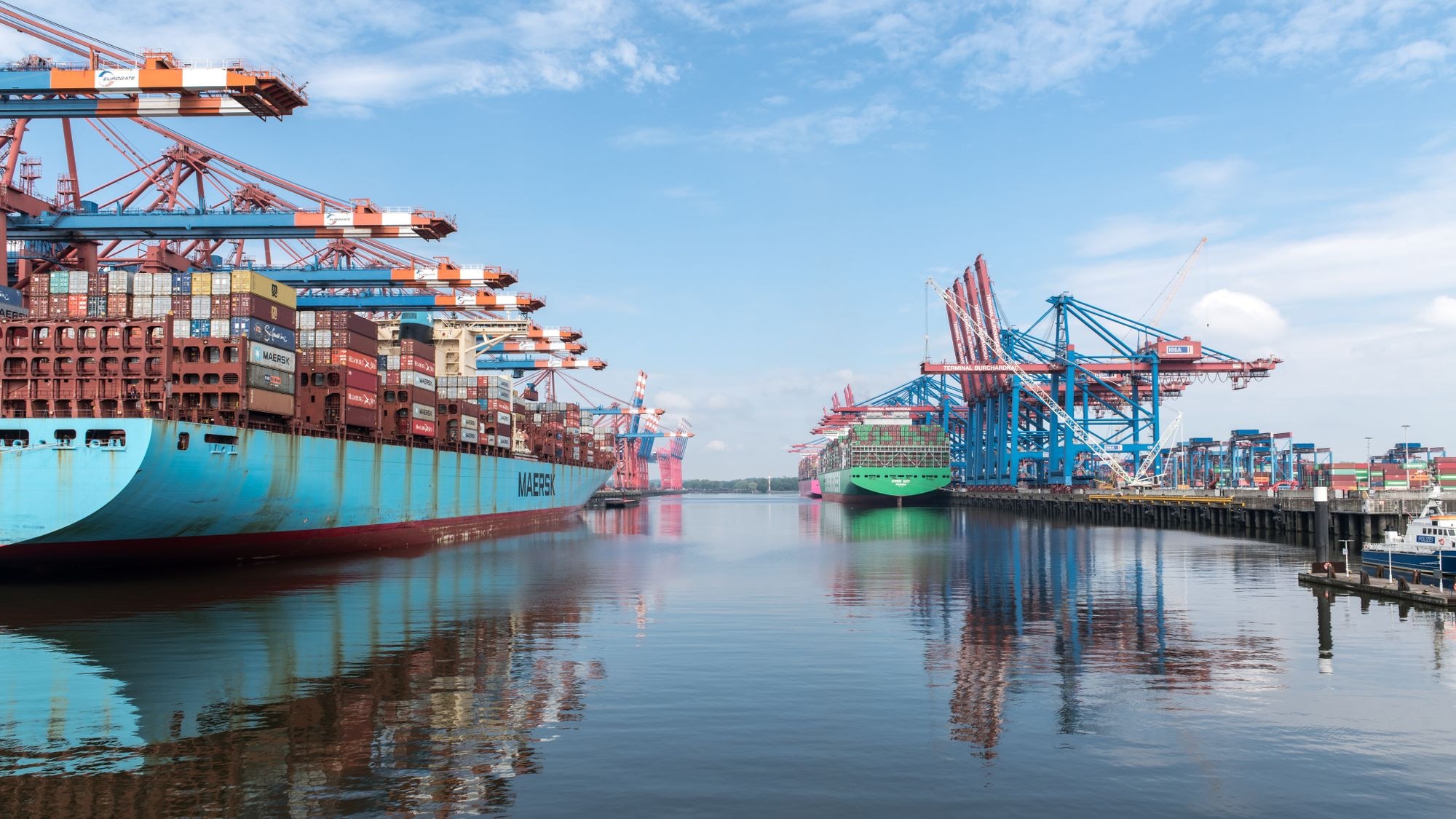
A direct ocean call to Abidjan.
The car sails from the US to Abidjan and clears there. The Côte d'Ivoire specifics are the strict age cap and the pre-shipment inspection, both handled before the vessel leaves.
Container origins
Load at one of six container warehouses: NY/NJ, Savannah, Miami, Houston, Long Beach, Seattle. Container suits high-value cars, multi-car consolidation, or anything co-loaded with parts. A 40HC commonly takes four cars, five when they're small enough to nest, three when they're full-size, loaded to the safest high-density fit. Carriers include Maersk, MSC, CMA CGM, and Hapag-Lloyd.
Transit: roughly 18 to 30 days from the East Coast.
Customs: ECOWAS duty plus the Ivorian levies and VAT at Abidjan, after the pre-shipment inspection clears.
RoRo origins
Five RoRo terminals: Baltimore, Brunswick, Galveston, Jacksonville, Port Hueneme. RoRo is the cheaper choice for a clean running car inside the cap. Lines on the US-to-West-Africa lane include Grimaldi and Sallaum. Quarter-tank fuel maximum per SOLAS rules.
Not carried: passenger cars over 5 years, which draw a fine and forced re-export, and RHD.
Personal effects permitted in containers, not in RoRo.
Ivorian customs at Abidjan, with inspection.
Côte d'Ivoire pairs the ECOWAS duty with a strict age cap and a mandatory pre-shipment inspection in the country of origin. The inspection verifies age, condition, and conformity before the car ships, which is the step that keeps a car from being refused at Abidjan. All cargo with a final destination in Côte d'Ivoire also requires a validated BSC (Bordereau de Suivi des Cargaisons) certificate prior to vessel arrival. Missing this certificate can cause delays, penalties, or cargo rejection.
The clearance path
Pre-purchase age check
The desk reads the build year off the VIN and confirms the car is inside the 5-year passenger cap (7 for pickups, 10 for larger vehicles), because an over-age car draws a fine and forced re-export at Abidjan.
Pre-shipment inspection
A mandatory inspection in the US verifies age, condition, and conformity and issues the certificate Ivorian customs requires. The desk arranges it before the vessel sails.
US-side preparation
AES filing, ISF where required, HBL issuance, commercial invoice, packing list. Clean title. HBL consigned to the Ivorian buyer or their clearing agent.
Customs and registration at Abidjan
The car clears the ECOWAS duty plus Ivorian levies and VAT, the bill of lading releases against payment, and the buyer registers. LHD only. Documents in French.
BSC (Bordereau de Suivi des Cargaisons) certificate
CTN certificate is needed for all shipments going to Ivory Coast and DAPEX can assist with its processing. The following documents are required from the receiver (consignee): Certificate of Insurance, FDI Import License and the Consignee's OIC account Number. Please note that the consignee on the bill of lading must be registered on the OIC website.
Required documents
Original clean title
Clean title required. The VIN drives the age check that decides eligibility.
Pre-shipment inspection certificate
Issued in the US, verifying age, condition, and conformity. Required for clearance at Abidjan.
Commercial invoice on Dapex letterhead
Consignee, vehicle details, declared value, HBL number. Drives the duty assessment.
Bill of lading, in French where needed
HBL consigned to the buyer or their clearing agent. Ivorian customs works in French; the desk coordinates the paperwork.
FDI Import License, Certificate of Insurance and OIC account number
Required for CTN processing — without them the certificate will not be processed.
What Dapex files, US side
AES filing with US Customs. ISF where required. HBL under Dapex's NVOCC license, consigned to the Ivorian buyer or their clearing agent. Commercial invoice and packing list on Dapex letterhead. Title verification through our title team before pickup, the VIN-based age check before purchase, and coordination of the mandatory pre-shipment inspection. Standard consignee screening. Pre-alert pack to the Abidjan clearing agent. The French-speaking West Africa desk owns the file end to end.
What sells into Côte d'Ivoire.
A recent-car market, so the lane is late-model, clean stock. Within the 5-year cap, Ivorian buyers want reliable cars and family SUVs.
Recent sedans and SUVs.
Toyota, Honda, Hyundai, and Kia sedans and crossovers, plus mid-size SUVs, all inside the 5-year window. Reliable, parts-friendly, and able to pass the pre-shipment inspection.
Pickups and work vehicles.
Pickups and light commercial vehicles, which get the slightly longer 7-year window. Useful for business buyers and the regional trade through Abidjan.
Over-age cars, RHD.
Passenger cars over 5 years draw a fine and forced re-export, so they don't ship on this lane, and RHD isn't allowed for permanent registration. Beyond that, the standing Dapex rules hold: clean title (25-year US Customs exception), no unreleased liens, no personal effects loose in RoRo. Quarter-tank fuel maximum on RoRo per SOLAS.
What moves the rate on this lane.
A clean ocean lane with one extra step. Freight is freight; the variables are the carrier market, the container-versus-RoRo choice, and the pre-shipment inspection that gates clearance.
Our work, our cost.
- Warehouse operations
- Booking fee
- Documentation handling
- Title verification
- HBL issuance
- Age check and inspection coordination
Carrier and routing-driven.
- Ocean freight (carrier-set)
- Fuel and bunker surcharges
- Pre-shipment inspection fee
- Abidjan port handling
- Container versus RoRo choice
- ECOWAS duty, levies, and VAT
Service standards.
- Compliance
- Documentation accuracy
- Submission urgency
- Dispatch priority
Lane-specific drivers
The strict 5, 7 and 10-year cap
Enforced with a fine and forced re-export, so the age check before purchase is decisive. A car one model year too old is a loss, not a surcharge.
The pre-shipment inspection
Mandatory in the US and required for clearance. We coordinate it before the vessel sails so the conformity certificate is in hand on arrival.
The ECOWAS duty stack
Customs duty plus Ivorian levies and VAT. The desk works the full landed number before purchase.
Container versus RoRo
A running car usually lands cheapest on RoRo. High-value cars go container. The desk prices both.

Who handles Côte d'Ivoire accounts.
The West Africa desk runs every Côte d'Ivoire account, in French and English. It confirms the age, arranges the pre-shipment inspection, and works the duty before you bid.
West Africa Desk
Côte d'Ivoire, Nigeria, Ghana, Senegal, Cameroon, Togo, Benin, and the wider West African markets. French and English. Business hours in Abidjan time, plus extended hours by request. Abidjan clearing-agent coordination on Dapex's Ivorian files.
What the desk owns.
VIN-based age check against the 5-year cap before quoting. Pre-shipment inspection coordination in the US. French clearance paperwork with the Abidjan agent. The ECOWAS duty pre-check. Title verification before pickup. Container-versus-RoRo call. File management through BL.
Things buyers ask about the Côte d'Ivoire lane.
Abidjan, one of West Africa's largest ports and a regional hub. It's a direct ocean call from the US, container or RoRo, with no transit country.
Five years for passenger cars, seven for pickups and minivans, ten for larger vehicles, set by decree 2017-792. It's enforced strictly, so the car has to be inside the cap before it ships.
It's not quietly surcharged. An over-age passenger car at Abidjan draws a fine of around two million CFA francs, roughly three thousand euros, plus the cost to re-export or destroy it. That's why we confirm the age before you bid.
Yes, a mandatory pre-shipment inspection in the country of origin that verifies age, condition, and conformity. The desk arranges it in the US before the vessel sails, so the certificate is in hand on arrival.
Customs duty under the ECOWAS tariff plus Ivorian levies and VAT. The desk works the full landed number before purchase so there are no surprises at Abidjan.
Abidjan is a regional gateway, but if the car is really bound for a neighboring market, that destination's own age rules and duty apply, and that's the page to plan around. We route to where the car actually registers rather than pretend a transit dodges the rules.
Left-hand drive only for permanent registration. US auction cars are LHD, so this isn't an issue on this lane.
Roughly 18 to 30 days from the East Coast to Abidjan, then inspection clearance, customs, and registration. The desk gives current numbers on the quote.
Ready to ship to Côte d'Ivoire?
Send VIN, lot number, vehicle year, and the US loading point. We'll confirm the car is inside the 5-year cap, arrange the pre-shipment inspection, work the ECOWAS duty, verify the title, and quote door to Abidjan.