West & North Africa / Algeria
Auto export to Algeria
Let's be straight about Algeria, because it isn't a wholesale auction lane like the rest of this list. Algeria only lets resident individuals import a used car, one every three years, and only if it's under three years old. Diesel cars are banned for individuals, and the importer of record has to be an Algerian resident. That rules out most of what moves through US auctions and rules out the dealer-and-broker trade entirely. Where it does work is a narrow, specific case: an Algerian resident bringing in a recent clean petrol, hybrid, or electric car. On EVs the tax break is real.
For reference purposes only. Regulations, policies, and procedures change constantly. Ensure you verify and validate all requirements for your specific shipments before initiating any.
The Algeria lane, in four numbers.
Only Algerian resident individuals can clear a used car for use, one every three years. Non-residents and the dealer trade cannot. This shapes the whole lane.
Under 3 years for resident imports, up to 5 for returning citizens with a change-of-residence certificate. Diesel banned. Petrol, hybrid, EV, LPG only.
Six container warehouses, five RoRo terminals. For the cars that qualify, RoRo for a running car, container for high-value or EV.
Around 30% duty plus 19% VAT and a 3% solidarity fee, with reductions by type. EVs get an 80% duty cut, the real arbitrage here. ENACTA inspection. LHD.
A personal-import lane, not a trade lane.
Algeria spent years with used-car imports effectively closed, then reopened a narrow window for residents. The rules are built around individuals, not the trade: you have to be an Algerian resident, the car has to be under three years old, it can't be diesel, and you can only do it once every three years. For a dealer buying volume at US auctions, that's a closed door. For the right individual buyer, it's a real and legal lane, and the EV tax break makes one corner of it genuinely attractive.
Resident, recent, clean, ideally electric.
An Algerian resident bringing in a US car under three years old, petrol, hybrid, or electric, is the case that clears. The car has to pass ENACTA technical control and the resident is the importer of record. On an EV the 80% duty reduction makes the landed cost genuinely competitive.
- Algerian resident as importer of record
- Under 3 years, petrol, hybrid, or EV
- EV gets an 80% duty reduction
- One import per resident per 3 years
What Algeria won't take.
The dealer-and-broker trade can't use this lane, because a non-resident can't be the importer. Diesel cars are out. Anything three years or older is out, five for returning citizens. Salvage is out. Most of the US auction pool, older, diesel, salvage, big-engine, simply doesn't fit, and we'll tell you that rather than waste your money.
- No non-resident or dealer imports
- No diesel, no salvage
- Nothing 3 years or older
- We say no rather than sell you a problem
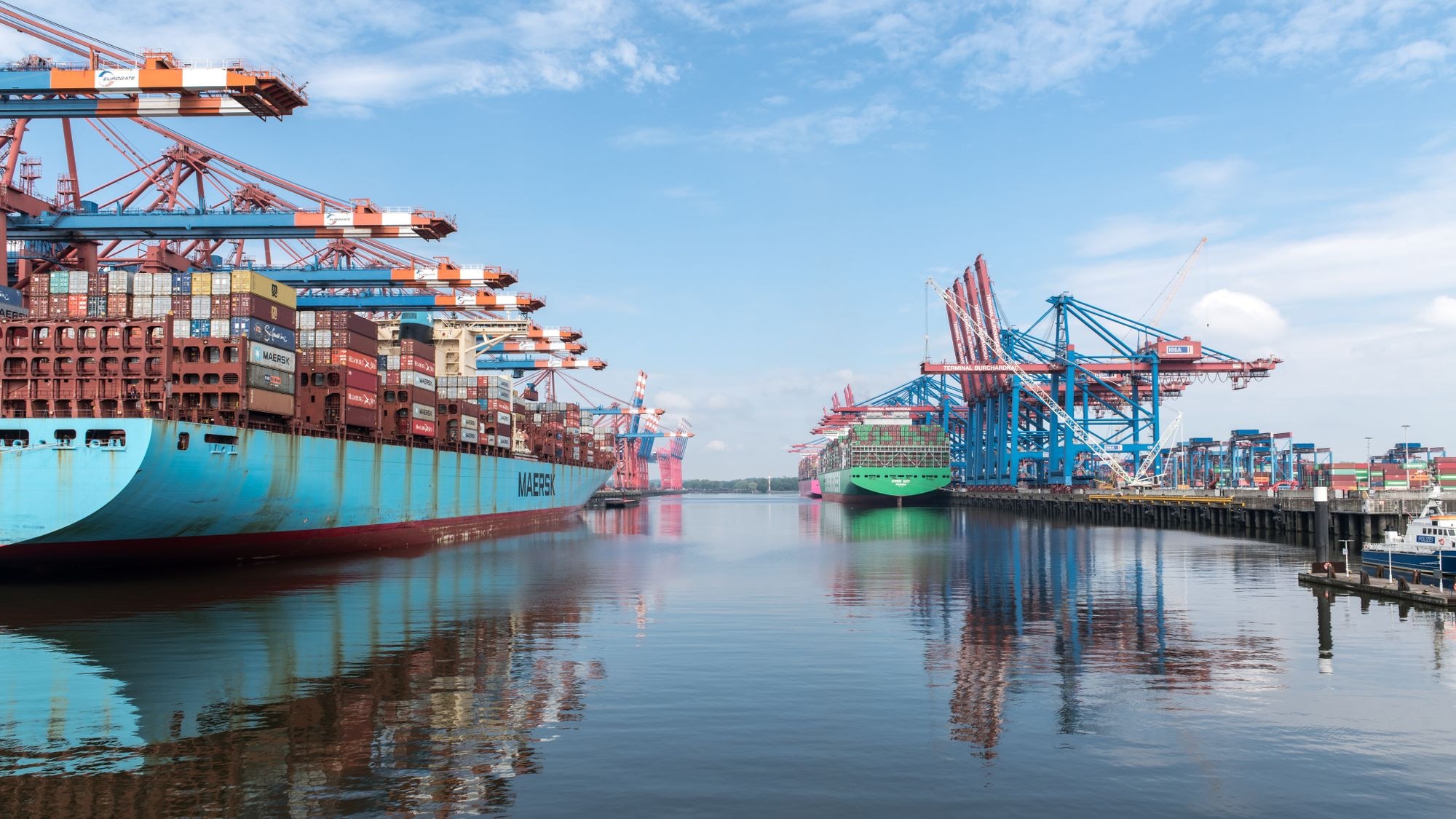
A direct ocean call, for the cars that qualify.
For a qualifying resident import, the car sails direct to an Algerian port, Algiers or Oran, and clears there. The US-side operation is the same as our other lanes; the Algeria specifics are the eligibility rules and the ENACTA inspection.
Container origins
Load at one of six container warehouses: NY/NJ, Savannah, Miami, Houston, Long Beach, Seattle. Container suits high-value cars and EVs, or anything co-loaded with parts. A 40HC commonly takes four cars, five when they're small enough to nest, three when they're full-size, loaded to the safest high-density fit. Carriers include Maersk, MSC, CMA CGM, and Hapag-Lloyd.
Transit: roughly 15 to 28 days from the East Coast via the Mediterranean.
Customs: around 30% duty plus 19% VAT and the 3% solidarity fee, with reductions by fuel type, the EV cut being the largest.
RoRo origins
Five RoRo terminals: Baltimore, Brunswick, Galveston, Jacksonville, Port Hueneme. RoRo is the cheaper choice for a qualifying running car. Lines into the West Mediterranean include Grimaldi and others. Quarter-tank fuel maximum per SOLAS rules.
Not carried: diesel cars, salvage, anything over the age cap, and any shipment where the importer isn't an Algerian resident.
Personal effects permitted in containers, not in RoRo.
Algerian customs, and the eligibility wall.
Algeria's rules are gatekeeping rules. Before freight is even a question, the importer has to be an eligible resident, the car has to be under the age cap and the right fuel type, and the ENACTA technical control has to be satisfied. The desk works the eligibility first, because if it fails, nothing else matters.
The clearance path
Eligibility check
The desk confirms the importer is an Algerian resident individual within their three-year window, the car is under three years (five for a returning citizen with a change-of-residence certificate), not diesel, and not salvage. If any of these fail, the shipment doesn't proceed.
US-side preparation
AES filing, ISF where required, HBL issuance, commercial invoice, packing list. Clean title. HBL consigned to the resident importer.
Customs and ENACTA at the port
The car clears around 30% duty plus 19% VAT and the 3% solidarity fee, with the fuel-type reduction applied, and passes the ENACTA technical control. Payment runs through the importer's bank in foreign exchange, not cash.
Registration and the clawback rule
The resident registers the car. Note the early-sale clawback: selling within the first three years repays the duty saved on a sliding scale. LHD.
Required documents
Proof of Algerian residency
The importer must be a resident individual; a change-of-residence certificate applies for returning citizens using the 5-year window.
Original clean title
Clean title required. The VIN drives the age and fuel-type check.
Commercial invoice on Dapex letterhead
Consignee, vehicle details, declared value, HBL number. Drives the duty assessment.
Bank foreign-exchange documentation
Payment of duties runs through the importer's bank in foreign currency. The desk coordinates the paperwork with the Algerian agent in French or Arabic.
What Dapex files US-side
AES filing with US Customs. ISF where required. HBL under Dapex's NVOCC license, consigned to the Algerian resident importer. Commercial invoice and packing list on Dapex letterhead. Title verification through our title team before pickup, and the eligibility check, residency, age, fuel type, before purchase, because eligibility is the gate. Standard consignee screening. Pre-alert pack to the Algiers or Oran clearing agent. The Arabic-speaking desk, working in French where needed, owns the file end to end.
What works into Algeria.
A narrow lane, so the list of what works is short and the list of what doesn't is long. We're upfront about both.
Recent EVs and petrol cars.
Late-model electric vehicles, where the 80% duty cut and the consumption-tax exemption make the math work, plus recent petrol and hybrid cars under three years. For a resident buyer, these are the real opportunities.
Returning-citizen cars.
Returning Algerian citizens with a change-of-residence certificate get a slightly wider window, up to five years, on a personal vehicle. The desk works the conditions for that case.
Most of the auction pool.
Diesel cars, salvage, anything three years or older, and any dealer or non-resident shipment. That excludes a large part of typical US auction stock. Beyond that, the standing Dapex rules hold: clean title (25-year US Customs exception), no unreleased liens, no personal effects loose in RoRo. Quarter-tank fuel maximum on RoRo per SOLAS.
What moves the rate on this lane.
For a qualifying car, freight is freight. The variable that decides whether Algeria is worth it is the fuel-type duty reduction, with EVs at the top.
Our work, our cost.
- Warehouse operations
- Booking fee
- Documentation handling
- Title verification
- HBL issuance
- Eligibility pre-check
Carrier and routing-driven.
- Ocean freight (carrier-set)
- Fuel and bunker surcharges
- Algiers or Oran port handling
- Container versus RoRo choice
- Duty by fuel type, VAT, solidarity fee
- ENACTA inspection
Service standards.
- Compliance
- Documentation accuracy
- Submission urgency
- Dispatch priority
Lane-specific drivers
The EV duty cut
Electric vehicles get up to an 80% duty reduction and escape the internal consumption tax that hits gasoline cars. This is the single thing that makes the Algeria lane genuinely competitive.
Eligibility before economics
Resident-only, under three years, no diesel. If the buyer or car fails these, the rate is irrelevant. We check eligibility first.
The early-sale clawback
Selling within three years repays the saved duty on a sliding scale, so this lane suits a keeper, not a flipper.
Bank foreign-exchange payment
Duties clear through the importer's bank in foreign currency, not cash, which the desk coordinates.
Who handles Algeria accounts.
The Arabic-speaking desk runs every Algeria account, in French where needed. Its first job is eligibility, because that's what decides whether the lane is open to you at all.
Arabic-speaking Desk
Algeria, Morocco, and the Maghreb, alongside the UAE, Saudi Arabia, Jordan, Iraq, Yemen, Lebanon, and the wider Arabic-speaking markets. Arabic, French, and English. Algiers and Oran clearing-agent coordination on Dapex's Algeria files.
What the desk owns.
The eligibility check, residency, age, fuel type, before anything else. The EV duty calculation, the real opportunity here. ENACTA coordination. Bank foreign-exchange paperwork. French or Arabic clearance. Title verification before pickup. The honest no when the lane doesn't fit, with a pointer to one that does.
Things buyers ask about the Algeria lane.
No. Algeria only lets resident individuals clear a used car for use, one every three years. A non-resident or a company holding cars for resale can't be the importer of record, so the wholesale trade doesn't work on this lane. We'll point dealers to a lane that fits.
Under three years for a resident import, and up to five years for a returning citizen with a change-of-residence certificate. Anything older is refused.
No. Diesel passenger cars are banned for individual imports. The lane is petrol, hybrid, electric, or LPG only.
Because the numbers work. Electric vehicles get up to an 80% duty reduction and are exempt from the internal consumption tax that hits gasoline cars, so a recent US EV can land in Algeria at a genuinely competitive cost. It's the one corner of this lane with real arbitrage.
Around 30% plus 19% VAT and a 3% solidarity fee, with reductions by fuel type: roughly 50% off for smaller petrol engines, less for larger, and up to 80% off for EVs. The desk runs the exact figure on your specific car.
Not right away without cost. There's an early-sale clawback: selling within the first three years repays the duty you saved on a sliding scale. The lane suits someone keeping the car, not flipping it.
Duties clear through the importer's bank in foreign currency, not cash. The desk coordinates the foreign-exchange paperwork with the Algerian clearing agent.
No. The lane is recent, clean, under-three-year cars only. Salvage doesn't fit, and neither does most older US auction stock.
Thinking about Algeria?
If you're an Algerian resident eyeing a recent clean petrol, hybrid, or electric car, send VIN, lot number, vehicle year, and fuel type, and we'll confirm eligibility, run the duty with the EV reduction where it applies, verify the title, and quote door to Algiers or Oran. If you're a dealer, tell us your target market and we'll point you to a lane that actually fits.